


Published February 2026 · Last updated: September 2026
With headlines about volcanic eruptions popping up regularly since 2021, many may wonder if Iceland is safe. The short answer is yes, Iceland remains one of the safest travel destinations in the world, even during active volcanic periods. But let’s dig deeper into how you can experience Iceland’s volcanic landscape without putting yourself at risk.
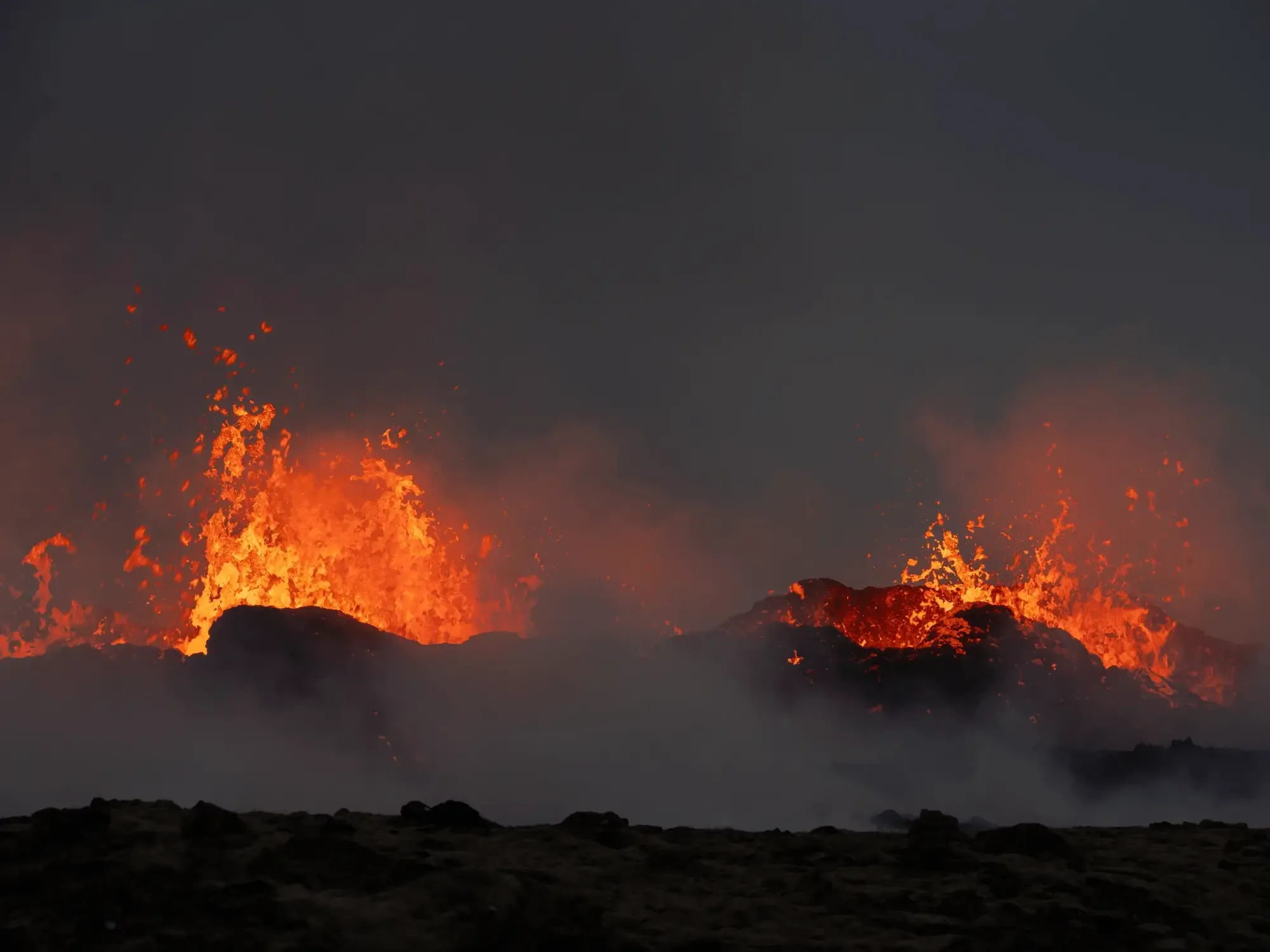
Iceland has seen more than 10 eruptions on the Reykjanes Peninsula since 2021, and here’s the thing: life goes on in Iceland. Flights operate normally, locals go to work, tours run on schedule, and the Ring Road stays open. In 2026, visiting Iceland is as safe as it’s ever been; you just need to know the facts and make smart choices about how you experience Iceland’s volcanoes.
Eruption status, September 2026: No eruption is underway in Iceland right now. The most recent eruption, on the Sundhnúkur crater row on the Reykjanes Peninsula, ran from 16 July to 5 August 2025. Since then the Icelandic Meteorological Office has measured continuing ground uplift beneath Svartsengi — roughly 29 million cubic metres of new magma — and considers another dike intrusion, possibly followed by an eruption, the most likely next step. In plain terms: the system is reloading, on no fixed schedule. Always check the current assessment at en.vedur.is before planning anything around an eruption.
Understanding Iceland’s Volcanic Activity
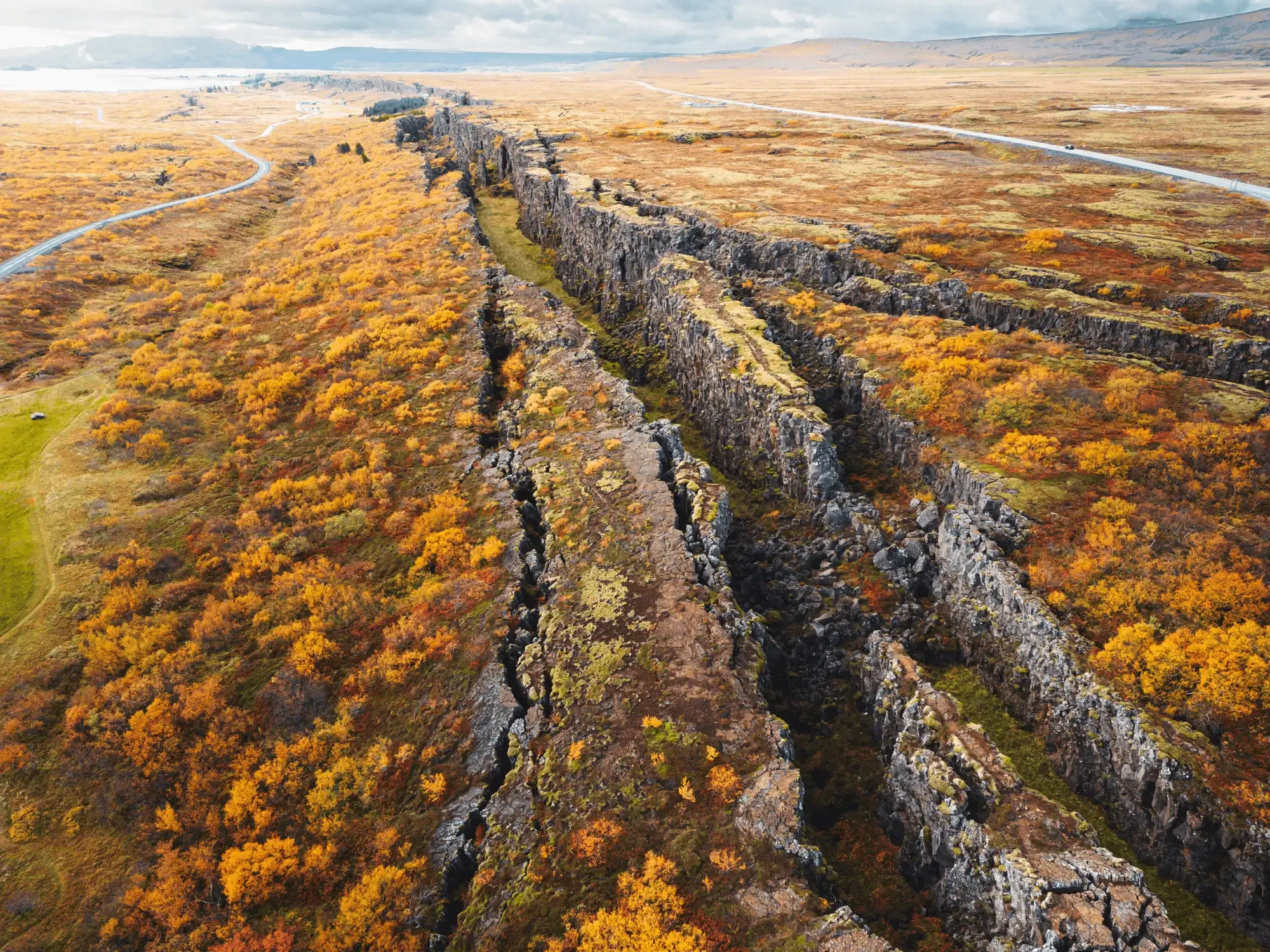
First, let’s get some perspective. Iceland experiences a volcanic eruption every three to five years on average. This isn’t new, it’s geology. The island sits on the Mid-Atlantic Ridge, where two tectonic plates are slowly pulling apart. Magma rises to fill the gap, and volcanoes erupt. This is literally how Iceland was shaped.
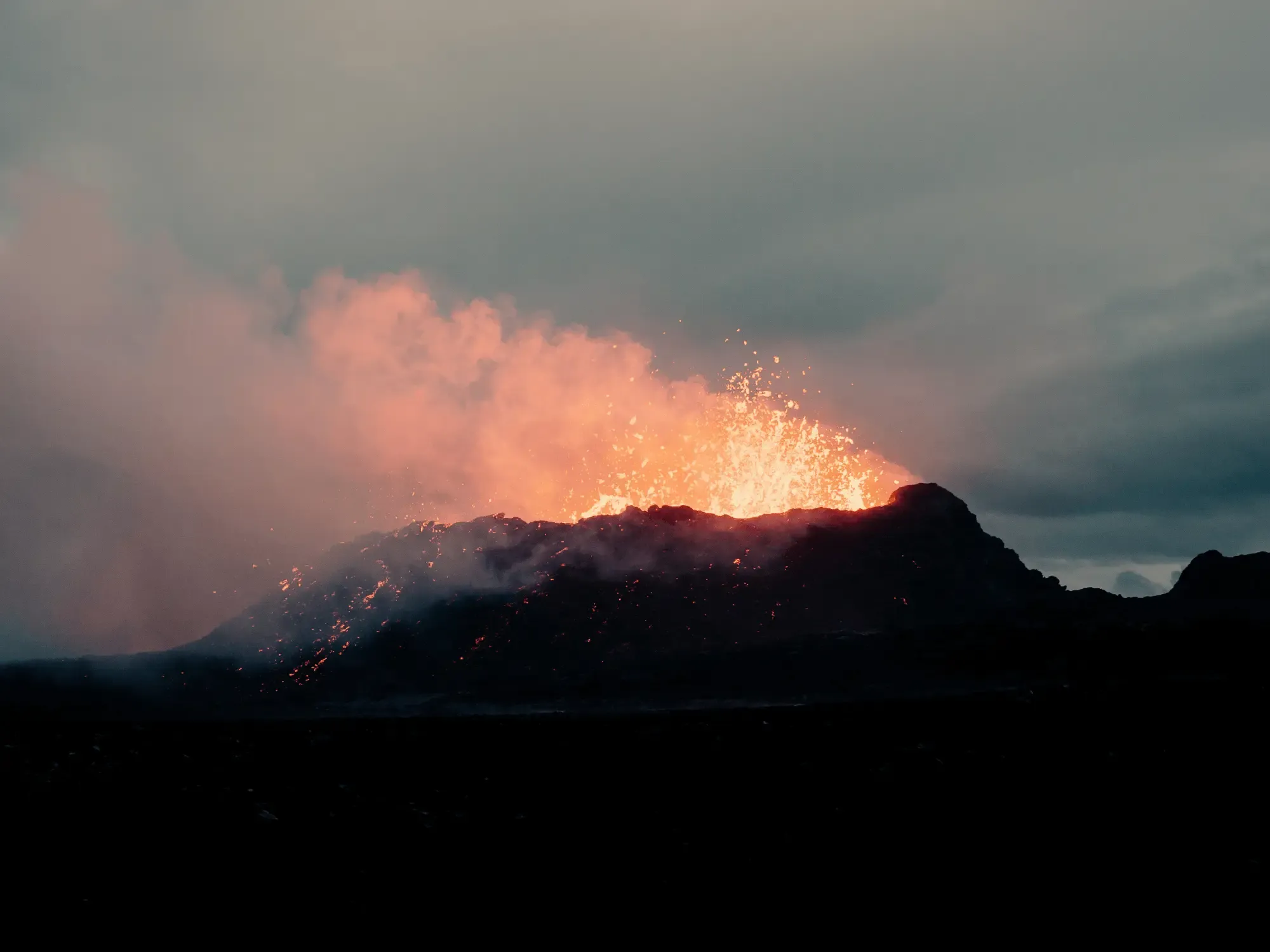
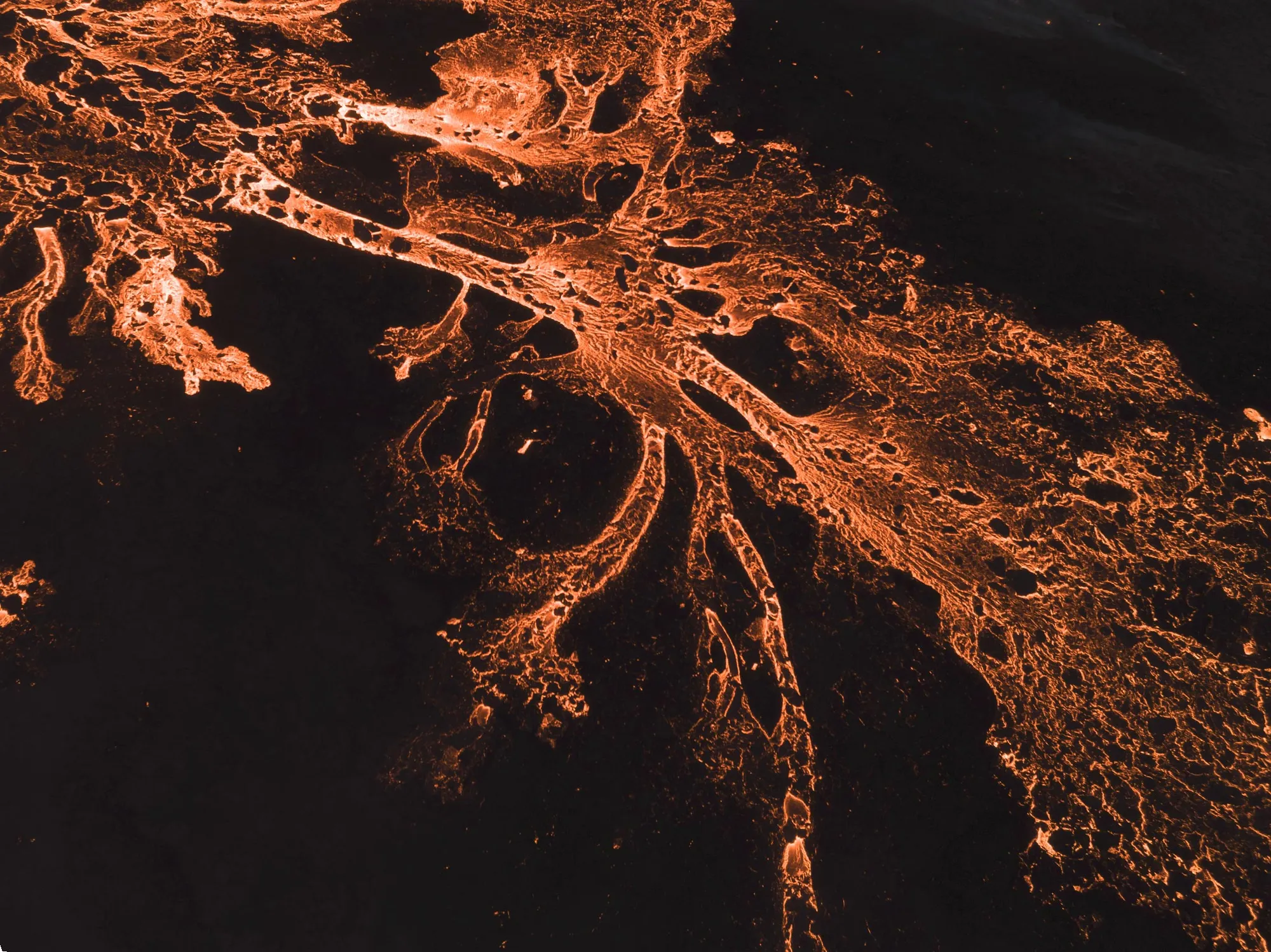
The recent string of eruptions on the Reykjanes Peninsula marks the awakening of a volcanic system that had been quiet for more than 800 years. These are fissure eruptions, which are cracks in the Earth that pour out lava, rather than explosive volcanic cones that shoot ash into the sky. That’s a crucial distinction. Fissure eruptions don’t ground flights or create ash clouds that spread across continents; they’re localized events that affect specific, usually remote areas.
So when you ask, “Is Iceland safe?” you need to understand that Iceland has state-of-the-art monitoring systems, evacuation protocols, and infrastructure specifically designed to handle volcanic activity. Icelanders have been living with volcanoes for over a thousand years.
The Safest Way to Experience Iceland’s Volcanoes
Here’s the good news: you don’t need to hike across lava fields or dodge toxic gases to experience Iceland’s volcanic drama. Volcano Express in Harpa offers a completely safe, yet spectacular way to witness volcanic forces up close.
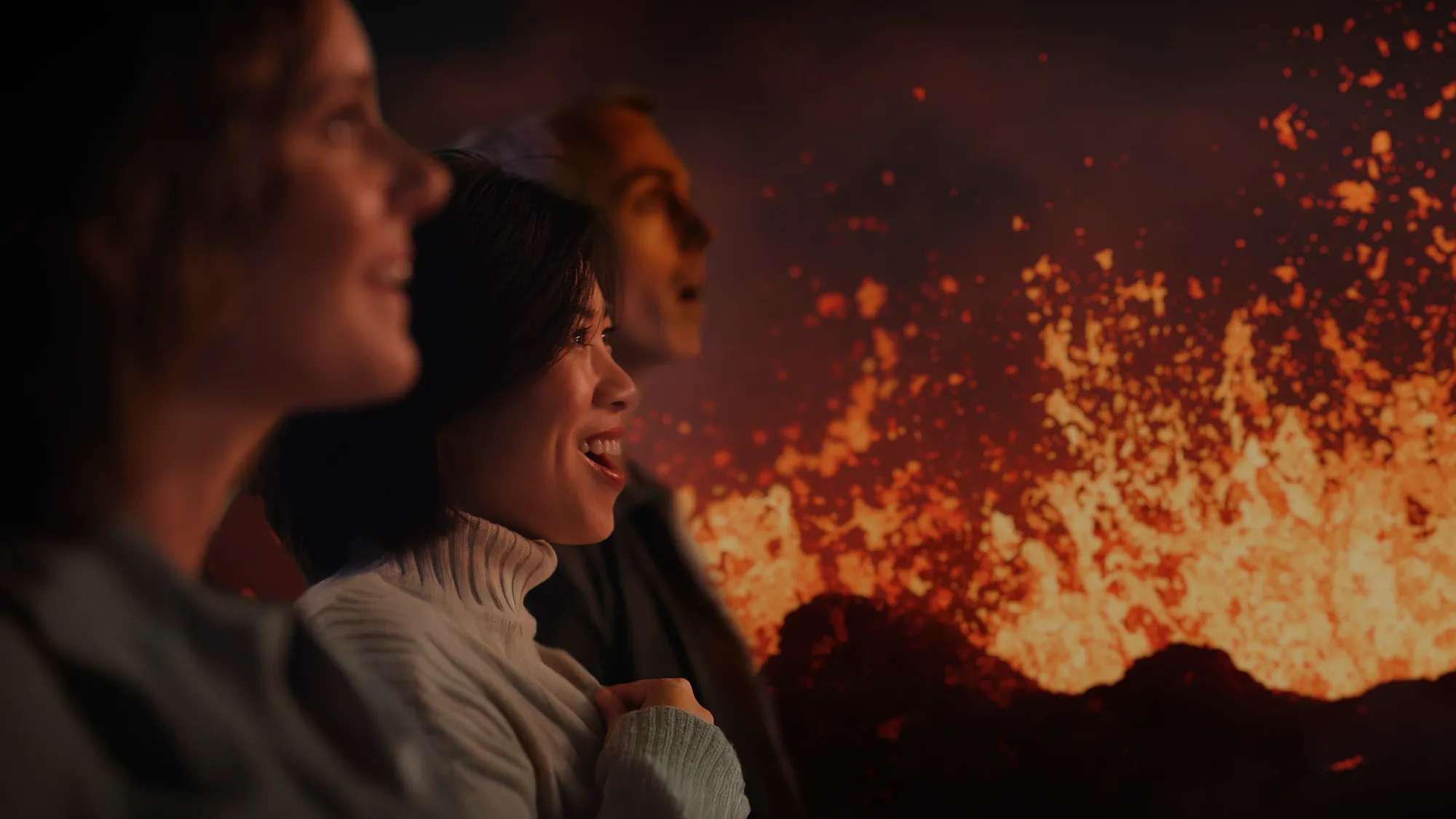
This isn’t a museum with static displays. It’s an immersive cinematic experience that puts you above erupting volcanoes, inside lava chambers, and face-to-face with the geological forces that shape Iceland. You’ll feel tremors through motion seating, you’ll sense heat from virtual lava flows, and you’ll see stunning 4K footage of actual eruptions on the Reykjanes Peninsula.
If You Want to See Real Lava
Maybe you’re the adventurous type, craving to see lava in person. You want to stand on actual lava fields, feel the heat, and see the glow with your own eyes, if there’s an eruption happening at the time of your visit, of course. That’s completely understandable, and it can be done safely if you follow the rules.
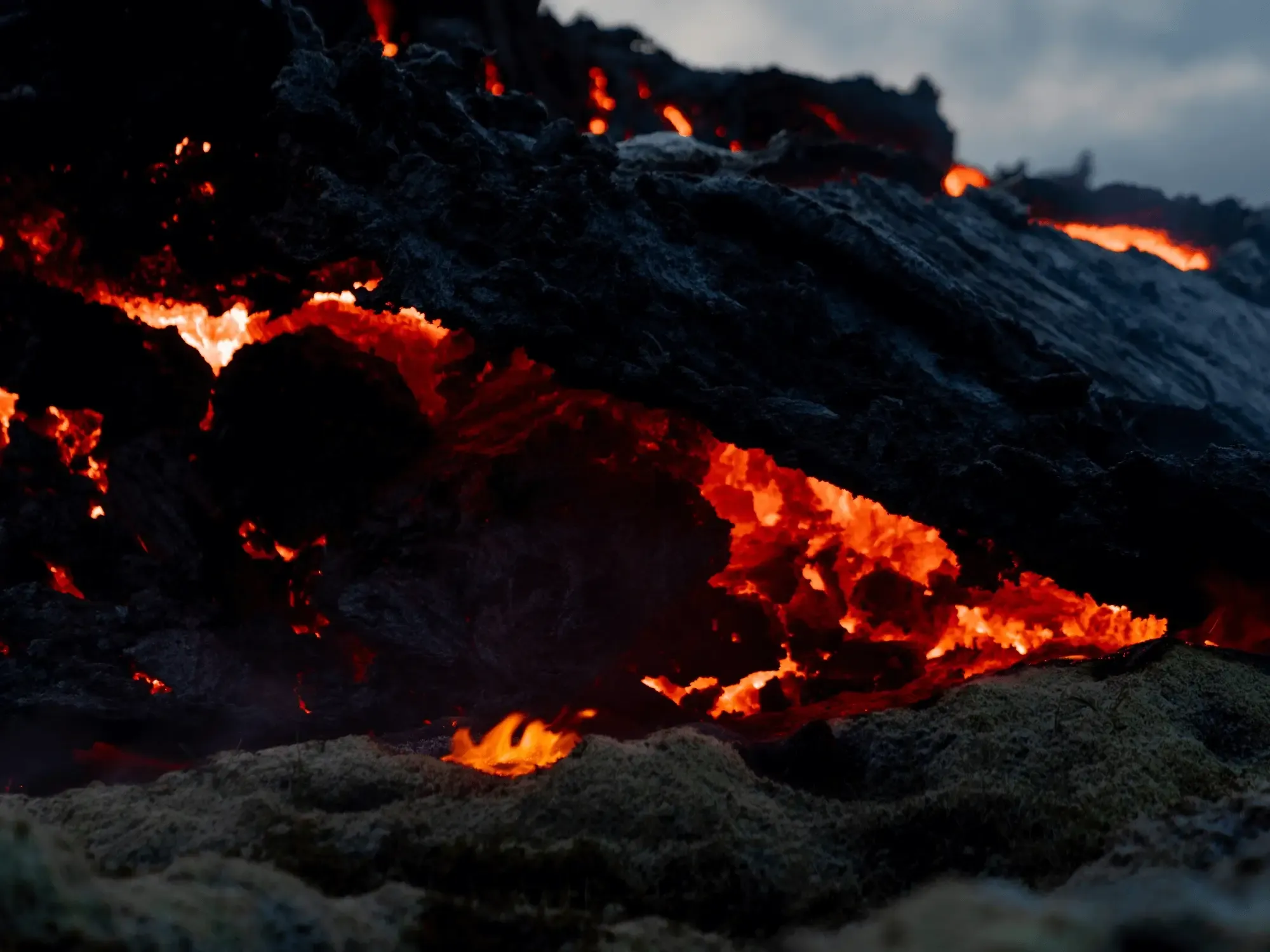
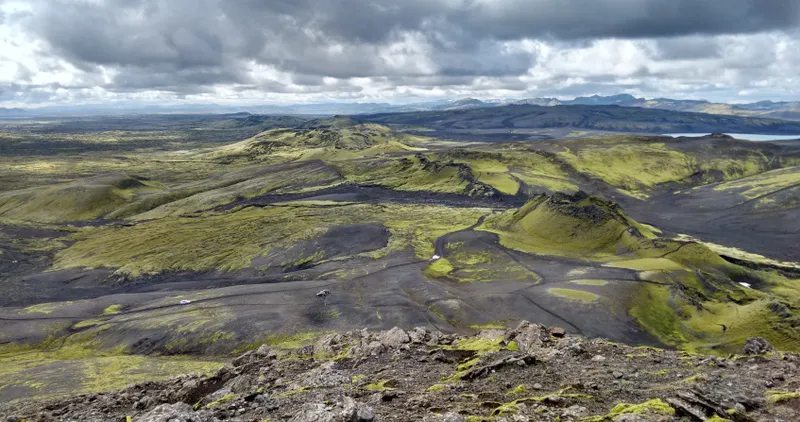
The 2021-2023 Fagradalsfjall eruptions were incredibly accessible with marked hiking trails leading right to the eruption sites, and thousands of people safely witnessed flowing lava. Those eruption sites remain accessible today, even though there isn’t an active eruption. You can hike across lava fields that were molten just a few years ago; it’s an incredible experience.
The more recent Sundhnúkur eruptions (2023-2025) have been trickier. They’ve occurred closer to infrastructure and populated areas, particularly near the town of Grindavík. Authorities have been more cautious about public access, and rightfully so. Access to active eruption sites depends entirely on safety assessments by Icelandic authorities.
Here’s the main rule: never approach an eruption site when it’s closed. The closures exist for very good reasons, such as toxic gases in the atmosphere, unstable ground, unpredictable lava flows, and rapid changes in volcanic activity. Icelandic authorities don’t close sites to spoil your fun; they close them to keep you safe and alive.
Can I See Glowing Lava in Iceland Right Now?
No — as of September 2026 there is no active lava flow anywhere in Iceland, and there has not been one since the Sundhnúkur eruption ended on 5 August 2025. Anyone selling a “see the eruption” experience today is selling the possibility, not the event.
What you can genuinely see between eruptions:
- The fresh lava fields. The 2021–2023 Fagradalsfjall flows in Geldingadalir are crossed by marked hiking trails, and the rock is still visibly raw — in places it steamed for years after the eruptions. This is the closest thing to yesterday’s eruption that exists anywhere in Europe.
- The Sundhnúkur area, where access depends on the current hazard assessment — parts of the 2023–2025 flows sit inside zones that open and close with the monitoring data. Check safetravel.is on the day.
- The eruptions on film, at full force. Volcano Express at Harpa Concert Hall shows the Reykjanes eruptions as they actually looked — filmed at the fissures between 2021 and 2024 — in a 10-minute motion-seat ride with heat effects, daily 10:00–20:00. Between eruptions, it is simply the only place where the lava still moves.
When the next eruption starts, this article’s safety rules apply from day one — and the viewing areas, if any are opened, will be announced by Civil Protection, not by tour operators.
Safety Rules for Visiting Lava Fields
If an eruption is active and authorities have opened safe viewing areas, follow these essential safety rules:
- Check Safetravel.is before you go to the eruption site. This is the official source for current conditions, closures, and safety warnings. Conditions can change rapidly, sometimes within hours. What was open yesterday might be closed today.
- Always stay on marked trails. The temptation to get closer is real, but new lava appears solid while remaining dangerously hot beneath the surface. The surface can collapse without warning, exposing molten lava that will kill you.
- Bring proper gear, such as sturdy hiking boots, which are essential as lava rock is sharp and uneven. Dress in layers; you might be cold hiking to the site, but you might sweat once you arrive. Bring water, snacks, and a headlamp if there’s any chance you’ll be out after dark.
- Don’t go alone. Hiking to eruption sites, even dormant ones, involves rough terrain and potential hazards. Having someone with you isn’t just safer, it’s smarter. If something goes wrong, help is available.
- Respect the local community. Recent eruptions have severely impacted the town of Grindavík. Residents have been evacuated multiple times, and some homes have been destroyed. When visiting the area, be mindful and respectful.
Helicopter Tours: The Premium Safe Option
If there’s an active eruption in 2026 and you want to see it in person, helicopter tours offer the safest way to get a close-up view. You’ll fly over the eruption site, seeing lava flows from above without any exposure to ground-level hazards. These tours book up quickly when eruptions are active, so if you’re interested, reserve early. They’re pricier than hiking, but you’re paying for safety, convenience, and perspectives you simply can’t get from the ground.
What About the Rest of Iceland?
Here’s something crucial to understand: even when there’s an active eruption on the Reykjanes Peninsula, it affects a tiny, localized area. Reykjavik, just 40 kilometers away, continues normally. So, when people ask, “Is Iceland safe?” during volcanic activity, the answer is overwhelmingly yes. Unless you’re specifically trying to access the immediate eruption area, volcanic activity will not impact your trip at all.
The Blue Lagoon and Recent Eruptions
One concern travelers often have is about the Blue Lagoon, Iceland’s most famous attraction. The Blue Lagoon is located on the Reykjanes Peninsula near recent eruption sites, and it has temporarily closed during a few eruptions as a safety precaution.
But here’s the reality: the Blue Lagoon has been open the vast majority of the time, even during periods of volcanic activity. The facility has sophisticated evacuation plans, protective barriers, and constant monitoring. When eruptions occur nearby, they evacuate guests safely and temporarily close. Once authorities give the all-clear, they reopen.
The Bottom Line
Is Iceland safe? Unequivocally yes. Can you safely experience volcanic activity? Absolutely, if you’re smart about it. The safest, most spectacular way to witness Iceland’s volcanic power is through Volcano Express at Harpa. You’ll get all the thrills with zero risk, see perspectives impossible to achieve otherwise, and walk away with a deep understanding of the forces that built this incredible island.
This article is part of our complete guide: Iceland Travel Basics.