Fire & Ice: When Volcanoes Erupt Beneath Glaciers
Where Fire Meets Ice in Iceland
In Iceland, volcanoes don’t just erupt into the open air. Many of our most powerful volcanic systems lie hidden beneath kilometers of glacial ice. When molten rock meets frozen water, the result is one of the most dramatic geological interactions on Earth. This is Iceland’s ultimate "Fire and Ice" moment: a violent collision between magma exceeding 1,100°C and solid ice, triggering explosive steam blasts, towering ash plumes, and catastrophic glacial floods.
Because large ice caps and active volcanic zones perfectly overlap across the country, subglacial eruptions are a defining feature of Icelandic geology, constantly reshaping the landscape and producing unique natural hazards.
What Happens When a Volcano Erupts Under Ice?
Imagine magma forcing its way upward into the belly of a thick glacier. The sequence unfolds like a massive geological chain reaction. As the magma rises, the intense heat rapidly melts the glacial ice from below, forming vast subglacial lakes. Because the water is trapped under immense pressure, it flashes into steam. This sudden expansion shatters the magma into fine, glass-like ash particles. Eventually, the pressure becomes too great, and the churning mixture of steam, ash, and meltwater violently erupts through the surface of the ice cap.
What Is a Jökulhlaup?
This sudden release of trapped meltwater creates a phenomenon known as a jökulhlaup (pronounced yo-kul-hloyp), which translates directly to "glacier leap" in Icelandic. These catastrophic glacial floods occur when the accumulated meltwater actually lifts the heavy glacier off its bedrock, allowing the water to suddenly escape and surge downstream.
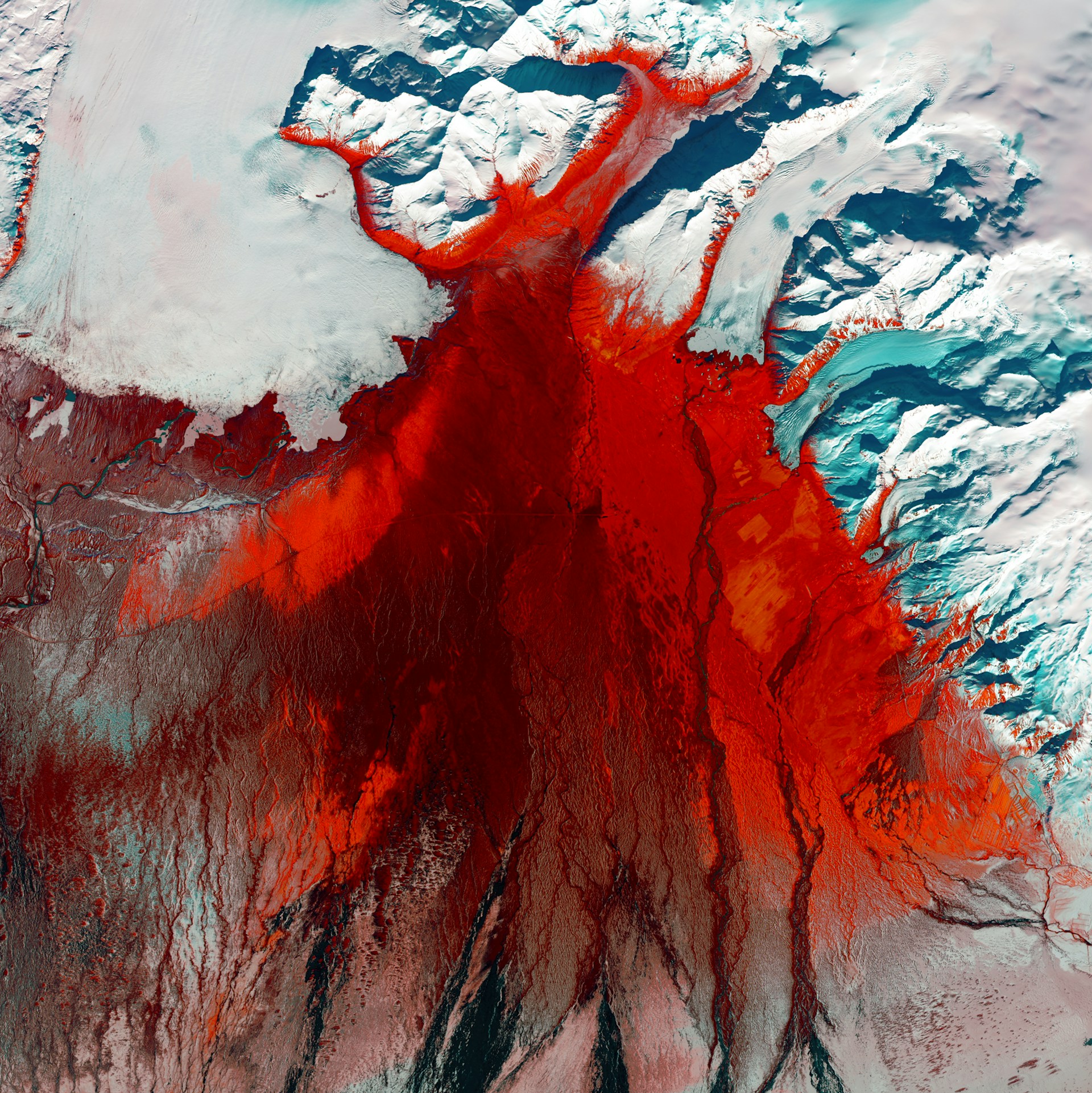
A jökulhlaup is a force of pure destruction. These massive, sediment-laden floods can move entire landscapes, carve out new river channels, wipe out bridges, and transport house-sized boulders with ease. During major subglacial eruptions, some Icelandic jökulhlaups have temporarily reached water flow rates greater than the Amazon River.
Why Subglacial Eruptions Create Massive Ash Clouds
You might wonder why these ice-covered volcanoes are often the most disruptive to global aviation. When magma interacts directly with water, the eruption becomes phreatomagmatic—meaning it is extremely explosive.
The rapid cooling of the magma shatters it into ultra-fine, microscopic glass particles. Instead of heavy, slow-moving lava flows, the volcano produces towering, lightning-filled eruption columns. Because the ash is so fine and lightweight, it travels much farther and lingers far longer in the atmosphere than ash from a standard open-air eruption.
Iceland: The Perfect Fire & Ice Laboratory
Iceland is one of the few places on the planet where tectonic plate spreading drives frequent eruptions directly beneath massive ice caps. This unique combination acts as a living laboratory, and the repeat interactions between magma and ice leave behind highly distinctive landforms that visitors can explore today.
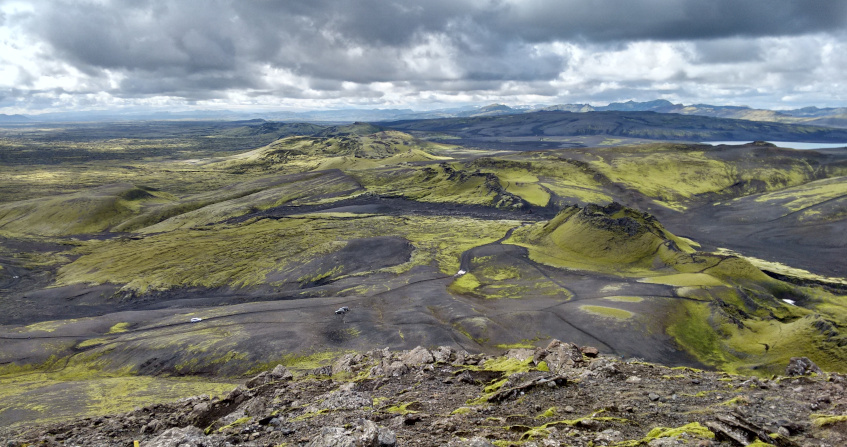
Flat-topped mountains called tuyas, steep móberg ridges, subglacial calderas, and vast black sand outwash plains (known as sandur) are all scars left behind by these epic elemental battles. Every braided glacial river and layered ash deposit tells a story of this violent cascading sequence: from the initial magma intrusion to the explosive breakthrough, and finally, the rushing floodwaters.
Experience the Collision
The fire rises, the ice melts, and pressure builds in silence beneath kilometers of solid glacier. Then, the Earth breaks. Steam explodes skyward, ash darkens the horizon, and floodwaters surge across the black volcanic sands. This is the true nature of Iceland—where fire and ice collide in spectacular motion.
At Volcano Express in Harpa Concert Hall, you don't just read about these epic geological forces; you feel them. Step out of the unpredictable Icelandic weather and into our immersive 4K cinematic journey, where you can safely experience the rumble of the earth, the heat of the magma, and the raw power of an Icelandic eruption.