
How Volcanoes Are Connected to Icelandic Folklore

May 25, 2026
Jenna Gottlieb

Key takeaways from this guide

  • Iceland's volcanoes aren't just geology — they're characters in the country's oldest stories, from the huldufólk who live in lava fields to Hekla, long believed to be the gate of hell.
  • Hekla has erupted more than 20 times since Iceland was settled and was feared across medieval Europe as a portal for the damned.
  • Katla, the volcano beneath the Mýrdalsjökull glacier, takes its name from a witch who allegedly threw herself into a crevasse — and is overdue for an eruption.
  • Folklore is still being written: the Reykjanes peninsula has woken up after 800 years of quiet, and the recent Fagradalsfjall eruptions are already entering the cultural imagination.
  • Visit Volcano Express at Harpa Concert Hall to understand the geology behind the stories — it makes the folklore land differently when you've seen what it's describing.*

Spend any time in Iceland, and you'll notice that the locals talk about volcanoes a little differently than you might expect. There's not much drama in it. Someone will mention that the ground is shaking again on the Reykjanes peninsula, the way someone in another country might mention that heavy rains are expected tomorrow. It's news, but it's not surprising news. The earth here moves. It's been doing that for a long time.

What most visitors miss, however, is how deeply the volcanic landscape is woven into the stories Icelanders have been telling each other for hundreds of years. The volcanoes aren't just geology here, they're characters who show up in the sagas, in folktales, in the place names you'll drive past on your way to a waterfall. You don't have to look hard to find them. Once you know what you're looking at, the country starts to read like a book whose first chapter was written by people who genuinely believed the gates of hell were located somewhere near the south coast.

A Country Built on a Crack

But first, before the folklore, a tiny bit of geography, because the folklore makes more sense with the context. Iceland sits atop the Mid-Atlantic Ridge, the boundary where the North American and Eurasian tectonic plates are slowly pulling apart. The country is one of the few places on Earth where you can stand directly on this boundary and watch it unfold. At Þingvellir National Park, the rift valley is visible to the naked eye, and the land is splitting at roughly two centimeters per year. The country exists because of the rift. It is, in a real sense, still being built.

For the people who first settled here in the late 800s, imagine your ship landing on a coast where the mountains occasionally bleed fire, and the ground steams in places. You'd come up with some stories, too.

The Hidden People in the Lava Fields

The most enduring piece of Icelandic folklore is the belief in huldufólk, the hidden people. They're often translated as elves, but that's a bit reductive. The hidden people are separate beings that live alongside humans, in the rocks, lava fields, and cliffs, mostly invisible but sometimes seen. They have their own farms, their own churches, their own social customs. They get offended easily, and crossing them brings bad luck.

This sounds quaint until you find out that road construction projects in Iceland have been rerouted to avoid disturbing rocks believed to be home to huldufólk. This is not a historical footnote; it happens now. Surveys have shown that a meaningful percentage of Icelanders won't rule out the possibility that they exist. The honest local position is something like a polite agnosticism: probably not, but why take the chance.

Here's where the volcanoes come in. The hidden people are believed to live primarily in lava formations, the twisted, jagged, almost architectural shapes that cooled lava leaves behind. If you've walked through a lava field at Dimmuborgir near Lake Mývatn, or through the moss-covered fields on the way to the south coast, you've seen the kind of landscape that locals will tell you, with varying degrees of seriousness, is home to entire huldufólk communities. (If you want a sense of just how hot the stuff was when it cooled into those shapes, see our piece on how hot lava actually gets.)

Hekla, the Gate of Hell

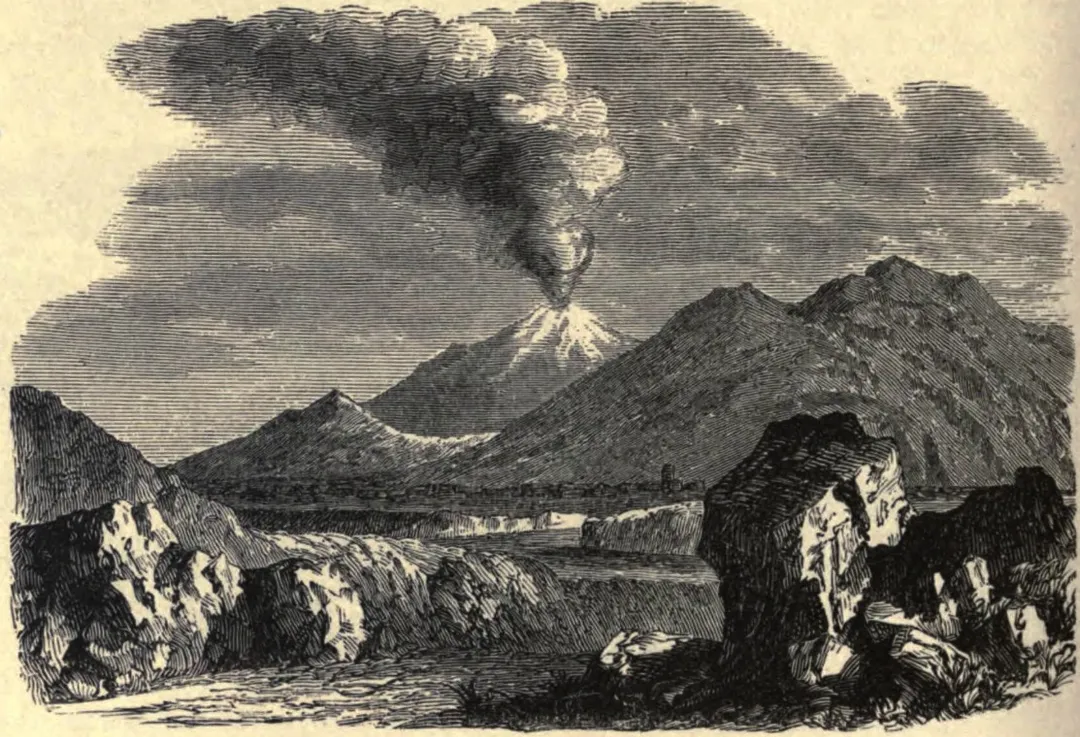
If the hidden people are the gentle side of Icelandic volcanic folklore, Hekla is the dark side. Hekla is a stratovolcano in southern Iceland, about two hours from Reykjavík, and for centuries it had a reputation across Europe as one of the most evil places in Christendom. Medieval European writers claimed that Hekla was the entrance to hell. Later writers added that the souls of the damned could be seen flying around its summit. Sailors reported hearing screams from the crater. Birds that landed on the rim were said to be witches in disguise.

The reputation wasn't entirely undeserved, as Hekla was genuinely terrifying. It has erupted more than 20 times since Iceland was settled. The eruptions tend to be violent and explosive, and the ash from Hekla has at various points darkened skies across Europe and ruined harvests in countries that had no idea Iceland even existed. The 1104 eruption was one of the largest, and it destroyed entire farms in the surrounding region: farms that have been excavated by archaeologists in recent decades, preserved like a kind of northern Pompeii under meters of pumice.

In Icelandic folklore, Hekla appears as a meeting place for witches, a portal for evil, and the kind of mountain you don't climb casually. Hekla was something to be respected, watched, and prepared for. The modern Icelandic phrase "Hekla er að fara af stað", which translates roughly to "Hekla is about to go off," still gets used as a kind of catch-all warning that something is about to happen, often unrelated to volcanoes at all.

Katla and the Witch Beneath the Ice

South of Hekla, hidden underneath the Mýrdalsjökull glacier, is Katla, and Katla has a story. In folklore, Katla was a housekeeper at a monastery in southern Iceland. She was bad-tempered, cruel to the staff, and rumored to be a witch. She owned a pair of magic breeches (trousers) that allowed her to run impossibly fast without tiring. When the shepherd boy who worked at the monastery borrowed the breeches without permission, Katla killed him in a rage and hid the body in a barrel of whey. When the whey ran low, and she knew the body would be discovered, she put on the breeches and fled, running up onto the glacier and throwing herself into a crevasse.

She's still in there, according to the story. And when the glacier erupts, which it does, periodically, with catastrophic results because of the meltwater floods called jökulhlaup that come tearing down toward the coast, that's Katla. She's not done being angry.

This is a favorite piece of Icelandic folklore because it does something so specific to this country: it takes a real, dangerous geological event (a sub-glacial eruption producing a massive flood), and it gives it a personality and a motive. Katla is overdue for an eruption, by the way. The locals know this, but they don't dwell on it. (We've covered the broader question of how safe Reykjavík actually is from Icelandic volcanoes in a separate piece.)

Eldfell, the Mountain That Wasn't There Yesterday

Some Icelandic volcanic folklore is so recent that it's barely folklore at all, it's still living memory. In January 1973, on the small island of Heimaey in the Westman Islands, a fissure opened up in the middle of the night, almost directly behind the town. By morning, a new volcano — later named Eldfell — was forming in someone's backyard. The eruption lasted five months. The entire population was evacuated by a fishing boat in the middle of a snowstorm, and lava buried about a third of the town.

The story of Heimaey isn't mythological yet, but it functions like a piece of folklore in the local imagination. It's the story Icelanders tell to explain what kind of country this is. The lesson isn't exactly that the volcanoes are dangerous. The lesson is that people are stubborn, the land moves, and you build your house and live anyway. It's the resilience of the Icelandic people.

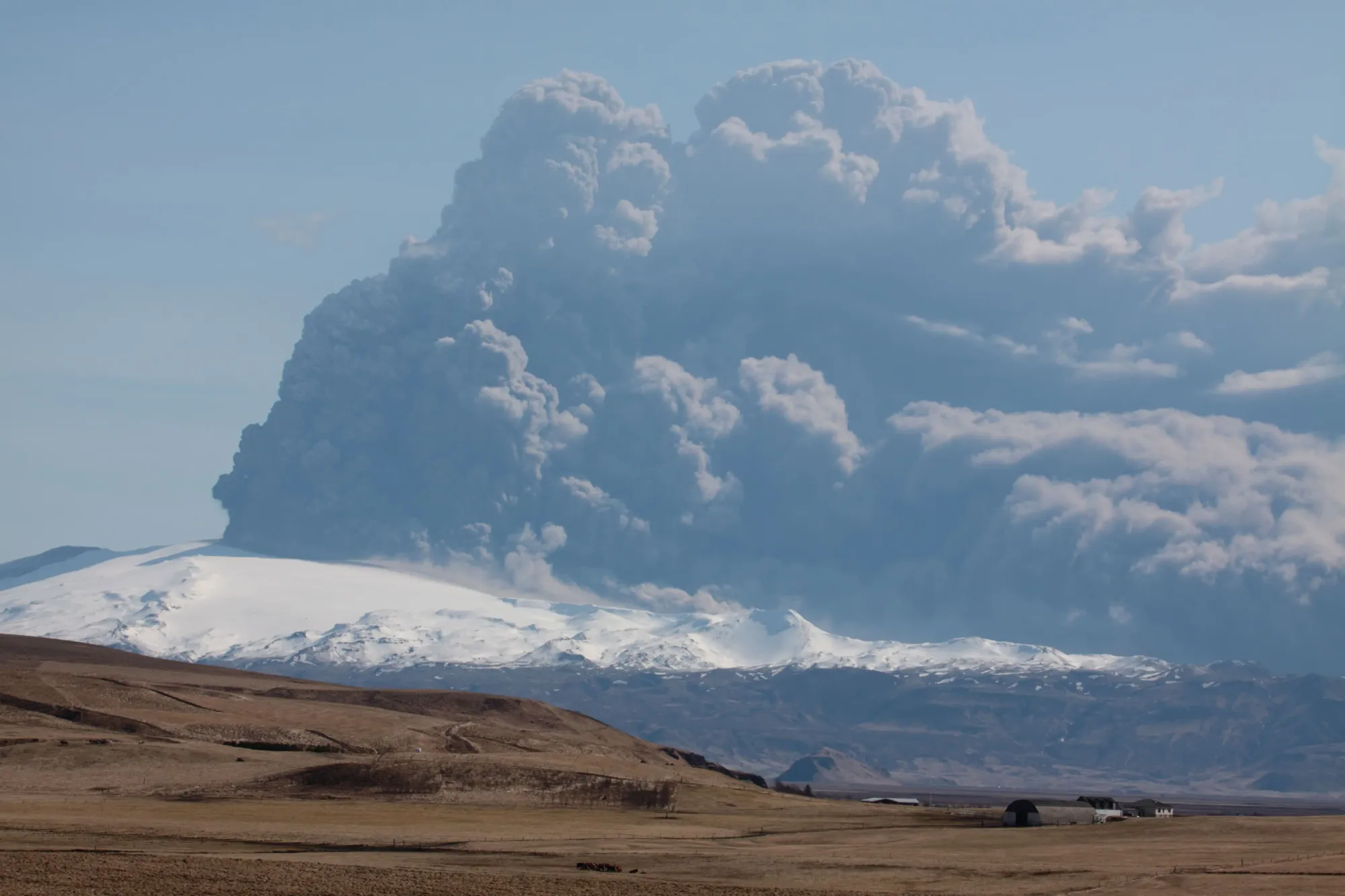
For a more recent example of an eruption that genuinely disrupted the world beyond Iceland, see our deep dive on the 2010 Eyjafjallajökull eruption that grounded European air travel.

Why Volcano Express Actually Matters

What Volcano Express does well, and the reason it's worth your time even if you've already booked a Golden Circle tour and a glacier hike, is that it actually connects you to the volcanic story of Iceland in a way that the landscape itself can't quite do on its own. When you're standing on a lava field, you see the result, but not the process. When you're driving past Hekla on the ring road, you're seeing a quiet mountain, but you're not seeing what happens when it isn't quiet.

Volcano Express puts you inside the story; it walks you through what's happening underneath the island, including the rift, the plumes, and the magma chambers. It gives you a sense of the scale, the violence and the strange, slow beauty of how this island gets built. It also covers the recent Reykjanes eruptions, which are useful to understand what you were looking at.

The reason this matters in the context of folklore is that it gives you a kind of dual literacy. After Volcano Express, when you drive out to the south coast, and someone mentions Katla, you have a much better sense of what Katla actually is, both the geological fact and the cultural figure. The folklore lands better when you understand the thing it's about. You start to see why the early Icelanders, with no science to fall back on, came up with the stories they did. The stories aren't wrong, exactly. They're just describing the same thing from a different angle.

The Stories That Are Still Being Written

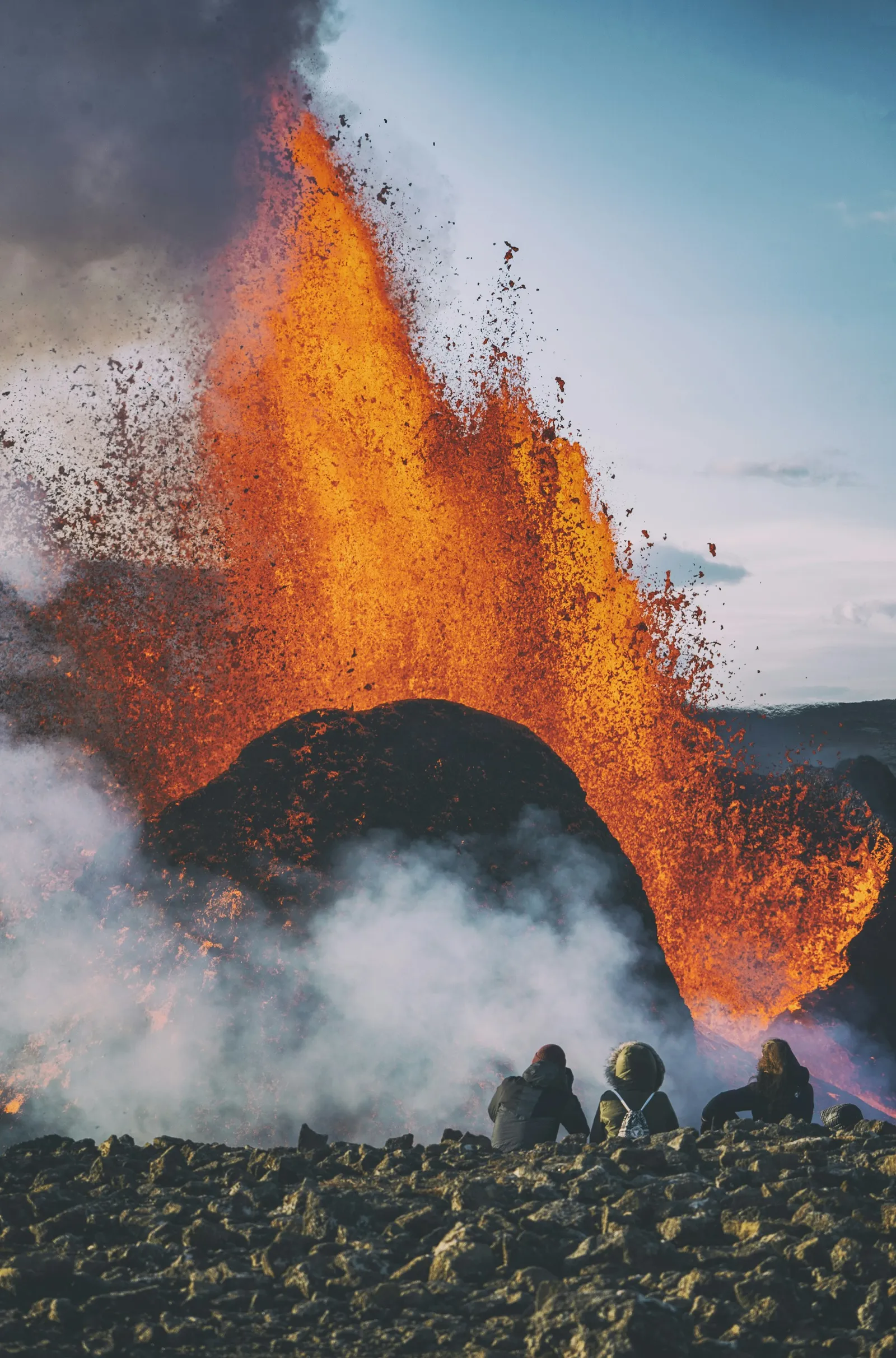
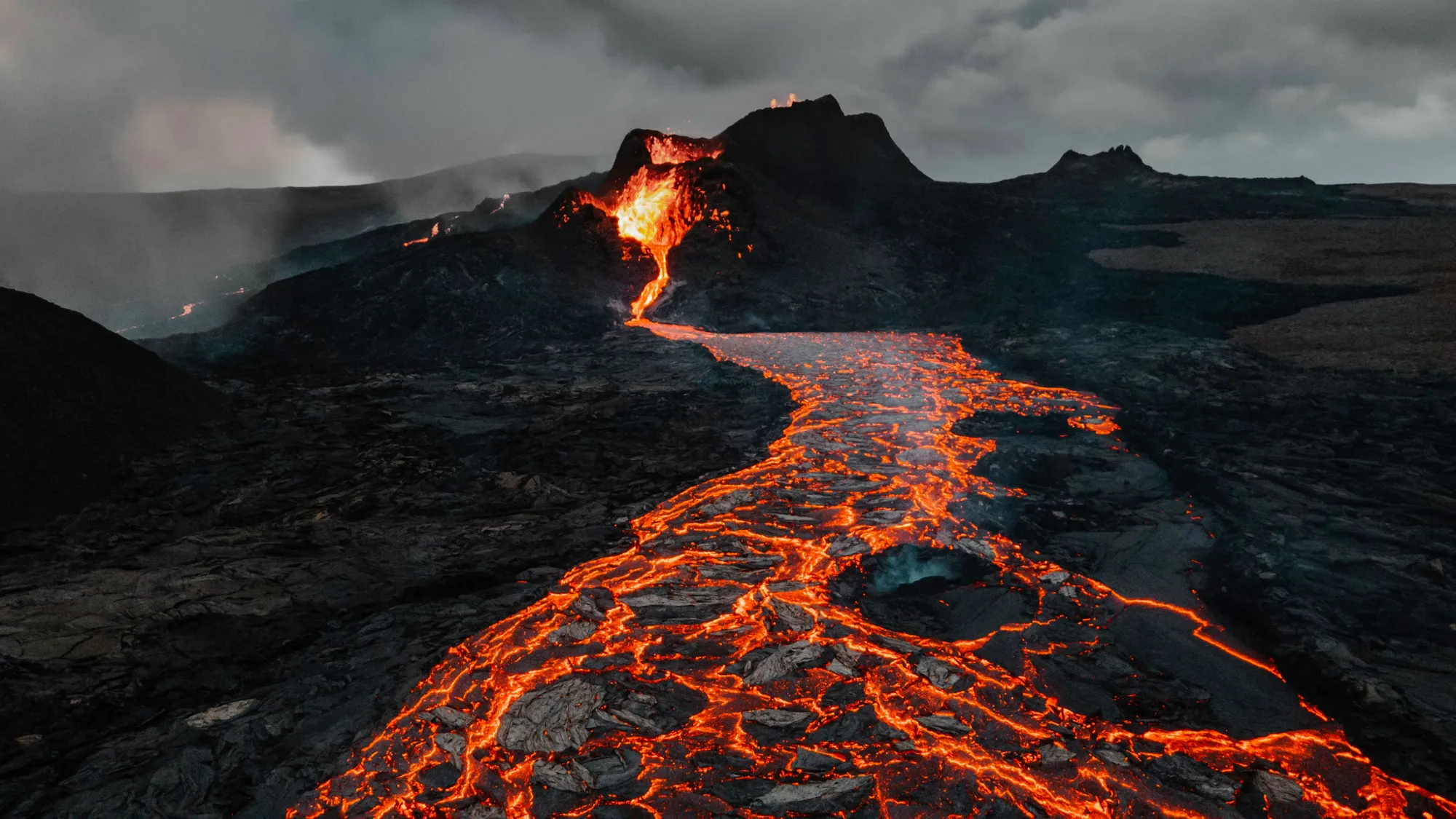
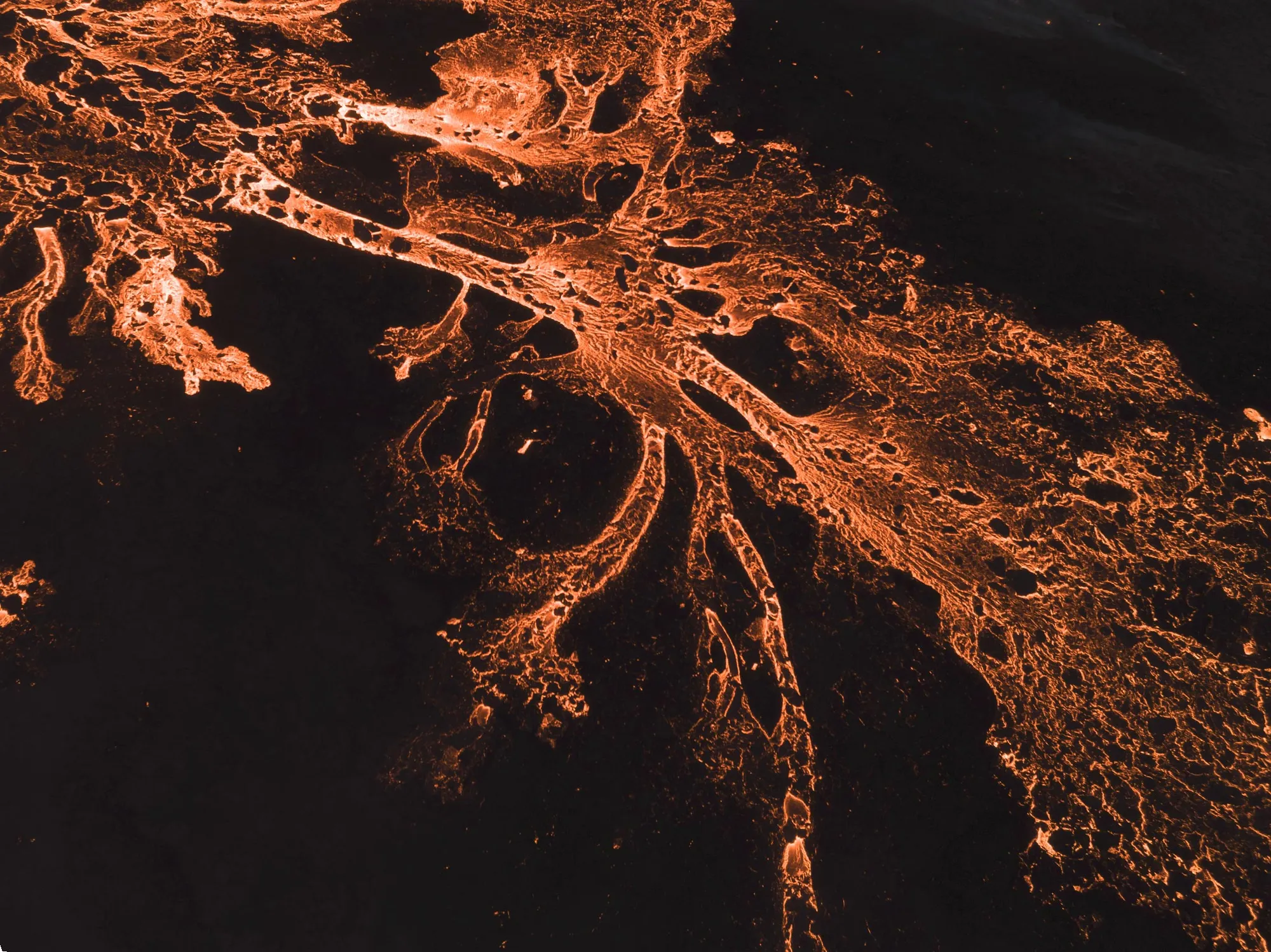
Here's the thing about volcanic folklore in Iceland: it isn't actually finished, it never will be. The country is still erupting. The Reykjanes peninsula was geologically quiet for around 800 years and has now woken up. The lava field near Fagradalsfjall, where the recent activity has been concentrated, is already accumulating a kind of mythology — the way people first felt the ground shake, the smell of sulfur drifting toward town, the orange glow on the horizon at night that you could see from the heart of Reykjavík. (For the current status of that eruption sequence and how it's evolving, see our piece on whether Fagradalsfjall is still erupting. The Icelandic Met Office maintains the most accurate live monitoring.)

This is what makes Icelandic folklore different from many other folk traditions: it's living, because the land that produced it is still moving. The hidden people still have homes to be displaced from. Hekla still has the potential to go off. Katla is still under the glacier, and she is still, by all accounts, in a mood.

When you visit Iceland, you're not just visiting a country with a lot of volcanoes; you're walking through the setting of a story that started 1,000 years ago and is not done. Pay attention to the names on the road signs. They mean things. The lava field you're driving past has been somebody's home, somebody's nightmare, somebody's explanation for why the world is the way it is. It's the most interesting kind of country to travel through.

If you want to start with the geology before tracing the folklore across the country yourself, see our complete guide to volcanoes in Iceland and our top 10 things to do in Reykjavík for first-time visitors.

Conclusion: The folklore lives because the land still moves

Icelandic volcanic folklore isn't a museum piece. It's a living tradition rooted in a landscape that has never stopped reshaping itself. Whether or not you believe in huldufólk or worry about Katla, the stories add a dimension to the country that geology alone can't deliver. Understanding both — the science and the story — is the best way to read the place.

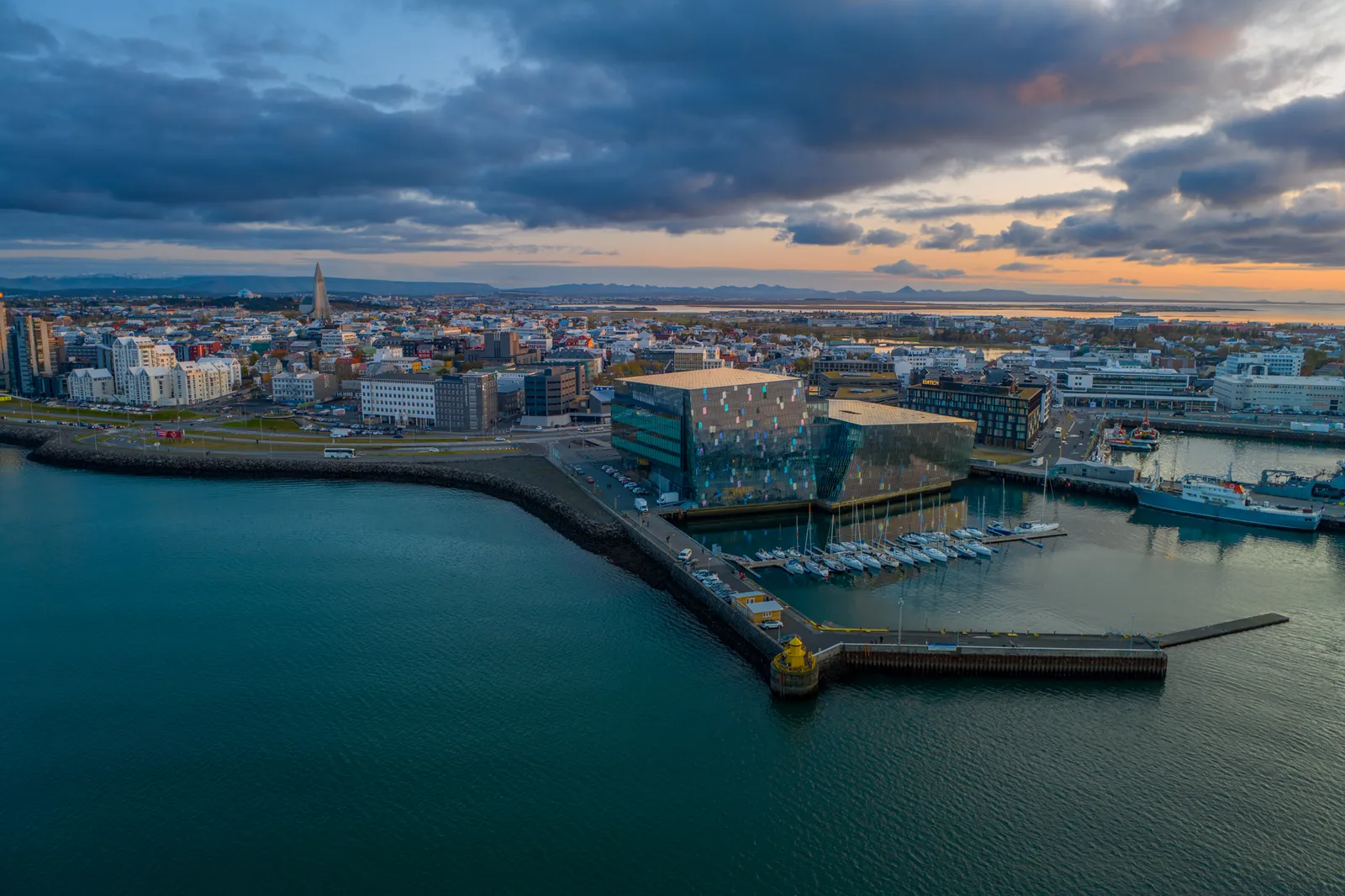
Start with the science at Volcano Express inside Harpa Concert Hall. Then drive south, look around, and listen.

Key takeaways from this guide

  • Iceland's volcanoes aren't just geology — they're characters in the country's oldest stories, from the huldufólk who live in lava fields to Hekla, long believed to be the gate of hell.
  • Hekla has erupted more than 20 times since Iceland was settled and was feared across medieval Europe as a portal for the damned.
  • Katla, the volcano beneath the Mýrdalsjökull glacier, takes its name from a witch who allegedly threw herself into a crevasse — and is overdue for an eruption.
  • Folklore is still being written: the Reykjanes peninsula has woken up after 800 years of quiet, and the recent Fagradalsfjall eruptions are already entering the cultural imagination.
  • Visit Volcano Express at Harpa Concert Hall to understand the geology behind the stories — it makes the folklore land differently when you've seen what it's describing.*

Spend any time in Iceland, and you'll notice that the locals talk about volcanoes a little differently than you might expect. There's not much drama in it. Someone will mention that the ground is shaking again on the Reykjanes peninsula, the way someone in another country might mention that heavy rains are expected tomorrow. It's news, but it's not surprising news. The earth here moves. It's been doing that for a long time.

What most visitors miss, however, is how deeply the volcanic landscape is woven into the stories Icelanders have been telling each other for hundreds of years. The volcanoes aren't just geology here, they're characters who show up in the sagas, in folktales, in the place names you'll drive past on your way to a waterfall. You don't have to look hard to find them. Once you know what you're looking at, the country starts to read like a book whose first chapter was written by people who genuinely believed the gates of hell were located somewhere near the south coast.

A Country Built on a Crack

But first, before the folklore, a tiny bit of geography, because the folklore makes more sense with the context. Iceland sits atop the Mid-Atlantic Ridge, the boundary where the North American and Eurasian tectonic plates are slowly pulling apart. The country is one of the few places on Earth where you can stand directly on this boundary and watch it unfold. At Þingvellir National Park, the rift valley is visible to the naked eye, and the land is splitting at roughly two centimeters per year. The country exists because of the rift. It is, in a real sense, still being built.

For the people who first settled here in the late 800s, imagine your ship landing on a coast where the mountains occasionally bleed fire, and the ground steams in places. You'd come up with some stories, too.

The Hidden People in the Lava Fields

The most enduring piece of Icelandic folklore is the belief in huldufólk, the hidden people. They're often translated as elves, but that's a bit reductive. The hidden people are separate beings that live alongside humans, in the rocks, lava fields, and cliffs, mostly invisible but sometimes seen. They have their own farms, their own churches, their own social customs. They get offended easily, and crossing them brings bad luck.

This sounds quaint until you find out that road construction projects in Iceland have been rerouted to avoid disturbing rocks believed to be home to huldufólk. This is not a historical footnote; it happens now. Surveys have shown that a meaningful percentage of Icelanders won't rule out the possibility that they exist. The honest local position is something like a polite agnosticism: probably not, but why take the chance.

Here's where the volcanoes come in. The hidden people are believed to live primarily in lava formations, the twisted, jagged, almost architectural shapes that cooled lava leaves behind. If you've walked through a lava field at Dimmuborgir near Lake Mývatn, or through the moss-covered fields on the way to the south coast, you've seen the kind of landscape that locals will tell you, with varying degrees of seriousness, is home to entire huldufólk communities. (If you want a sense of just how hot the stuff was when it cooled into those shapes, see our piece on how hot lava actually gets.)

Hekla, the Gate of Hell

If the hidden people are the gentle side of Icelandic volcanic folklore, Hekla is the dark side. Hekla is a stratovolcano in southern Iceland, about two hours from Reykjavík, and for centuries it had a reputation across Europe as one of the most evil places in Christendom. Medieval European writers claimed that Hekla was the entrance to hell. Later writers added that the souls of the damned could be seen flying around its summit. Sailors reported hearing screams from the crater. Birds that landed on the rim were said to be witches in disguise.

The reputation wasn't entirely undeserved, as Hekla was genuinely terrifying. It has erupted more than 20 times since Iceland was settled. The eruptions tend to be violent and explosive, and the ash from Hekla has at various points darkened skies across Europe and ruined harvests in countries that had no idea Iceland even existed. The 1104 eruption was one of the largest, and it destroyed entire farms in the surrounding region: farms that have been excavated by archaeologists in recent decades, preserved like a kind of northern Pompeii under meters of pumice.

In Icelandic folklore, Hekla appears as a meeting place for witches, a portal for evil, and the kind of mountain you don't climb casually. Hekla was something to be respected, watched, and prepared for. The modern Icelandic phrase "Hekla er að fara af stað", which translates roughly to "Hekla is about to go off," still gets used as a kind of catch-all warning that something is about to happen, often unrelated to volcanoes at all.

Katla and the Witch Beneath the Ice

South of Hekla, hidden underneath the Mýrdalsjökull glacier, is Katla, and Katla has a story. In folklore, Katla was a housekeeper at a monastery in southern Iceland. She was bad-tempered, cruel to the staff, and rumored to be a witch. She owned a pair of magic breeches (trousers) that allowed her to run impossibly fast without tiring. When the shepherd boy who worked at the monastery borrowed the breeches without permission, Katla killed him in a rage and hid the body in a barrel of whey. When the whey ran low, and she knew the body would be discovered, she put on the breeches and fled, running up onto the glacier and throwing herself into a crevasse.

She's still in there, according to the story. And when the glacier erupts, which it does, periodically, with catastrophic results because of the meltwater floods called jökulhlaup that come tearing down toward the coast, that's Katla. She's not done being angry.

This is a favorite piece of Icelandic folklore because it does something so specific to this country: it takes a real, dangerous geological event (a sub-glacial eruption producing a massive flood), and it gives it a personality and a motive. Katla is overdue for an eruption, by the way. The locals know this, but they don't dwell on it. (We've covered the broader question of how safe Reykjavík actually is from Icelandic volcanoes in a separate piece.)

Eldfell, the Mountain That Wasn't There Yesterday

Some Icelandic volcanic folklore is so recent that it's barely folklore at all, it's still living memory. In January 1973, on the small island of Heimaey in the Westman Islands, a fissure opened up in the middle of the night, almost directly behind the town. By morning, a new volcano — later named Eldfell — was forming in someone's backyard. The eruption lasted five months. The entire population was evacuated by a fishing boat in the middle of a snowstorm, and lava buried about a third of the town.

The story of Heimaey isn't mythological yet, but it functions like a piece of folklore in the local imagination. It's the story Icelanders tell to explain what kind of country this is. The lesson isn't exactly that the volcanoes are dangerous. The lesson is that people are stubborn, the land moves, and you build your house and live anyway. It's the resilience of the Icelandic people.

For a more recent example of an eruption that genuinely disrupted the world beyond Iceland, see our deep dive on the 2010 Eyjafjallajökull eruption that grounded European air travel.

Why Volcano Express Actually Matters

What Volcano Express does well, and the reason it's worth your time even if you've already booked a Golden Circle tour and a glacier hike, is that it actually connects you to the volcanic story of Iceland in a way that the landscape itself can't quite do on its own. When you're standing on a lava field, you see the result, but not the process. When you're driving past Hekla on the ring road, you're seeing a quiet mountain, but you're not seeing what happens when it isn't quiet.

Volcano Express puts you inside the story; it walks you through what's happening underneath the island, including the rift, the plumes, and the magma chambers. It gives you a sense of the scale, the violence and the strange, slow beauty of how this island gets built. It also covers the recent Reykjanes eruptions, which are useful to understand what you were looking at.

The reason this matters in the context of folklore is that it gives you a kind of dual literacy. After Volcano Express, when you drive out to the south coast, and someone mentions Katla, you have a much better sense of what Katla actually is, both the geological fact and the cultural figure. The folklore lands better when you understand the thing it's about. You start to see why the early Icelanders, with no science to fall back on, came up with the stories they did. The stories aren't wrong, exactly. They're just describing the same thing from a different angle.

The Stories That Are Still Being Written

Here's the thing about volcanic folklore in Iceland: it isn't actually finished, it never will be. The country is still erupting. The Reykjanes peninsula was geologically quiet for around 800 years and has now woken up. The lava field near Fagradalsfjall, where the recent activity has been concentrated, is already accumulating a kind of mythology — the way people first felt the ground shake, the smell of sulfur drifting toward town, the orange glow on the horizon at night that you could see from the heart of Reykjavík. (For the current status of that eruption sequence and how it's evolving, see our piece on whether Fagradalsfjall is still erupting. The Icelandic Met Office maintains the most accurate live monitoring.)

This is what makes Icelandic folklore different from many other folk traditions: it's living, because the land that produced it is still moving. The hidden people still have homes to be displaced from. Hekla still has the potential to go off. Katla is still under the glacier, and she is still, by all accounts, in a mood.

When you visit Iceland, you're not just visiting a country with a lot of volcanoes; you're walking through the setting of a story that started 1,000 years ago and is not done. Pay attention to the names on the road signs. They mean things. The lava field you're driving past has been somebody's home, somebody's nightmare, somebody's explanation for why the world is the way it is. It's the most interesting kind of country to travel through.

If you want to start with the geology before tracing the folklore across the country yourself, see our complete guide to volcanoes in Iceland and our top 10 things to do in Reykjavík for first-time visitors.

Conclusion: The folklore lives because the land still moves

Icelandic volcanic folklore isn't a museum piece. It's a living tradition rooted in a landscape that has never stopped reshaping itself. Whether or not you believe in huldufólk or worry about Katla, the stories add a dimension to the country that geology alone can't deliver. Understanding both — the science and the story — is the best way to read the place.

Start with the science at Volcano Express inside Harpa Concert Hall. Then drive south, look around, and listen.

Share this article

Questions about

How Volcanoes Are Connected to Icelandic Folklore

Why are volcanoes so central to Icelandic folklore?
What are huldufólk and where do they live?
Is Hekla really the gate of hell?
When did Katla last erupt and is it dangerous?
What happened during the 1973 Eldfell eruption?
Where can I learn about Icelandic volcanoes without leaving Reykjavík?

How Hot Is Lava? The Science Behind an Icelandic Eruption

Icelandic lava erupts at 1,000–1,200°C and shapes everything from Iceland's landscapes to its food culture. Discover the science and where to feel it in Reykjavík.

Is Reykjavik Safe from Volcanoes? The Capital's Geology

Is Reykjavik Safe from Volcanoes? The Capital's Geology

Iceland Volcano Eruption 2010: Eyjafjallajökull Explained

Iceland eruption 2010: why Eyjafjallajökull shut down European airspace, how many flights were cancelled, and what the event tells us about Iceland's geology.

Is Fagradalsfjall Still Erupting?

Erupting volcano update for Fagradalsfjall and the Reykjanes Peninsula. Find out which system is active in 2026, where to check live status, and how to visit safely.
Other articles you may like

Related Article

This is just a placeholder that gets changed by finsweets CMS slider.
A magma river