Last updated: May 2026
The ground beneath Reykjavik is not quiet. Steam escapes through pavement grates. The harbour sits cold and silver in the early light. Reykjavik experiences begin before you've unpacked — a city built on lava, heated by the earth itself, where Iceland's volcanic geology is not history but present tense. This guide maps the geotourism encounters hiding in plain sight, and the routes that reach further.
Key takeaways
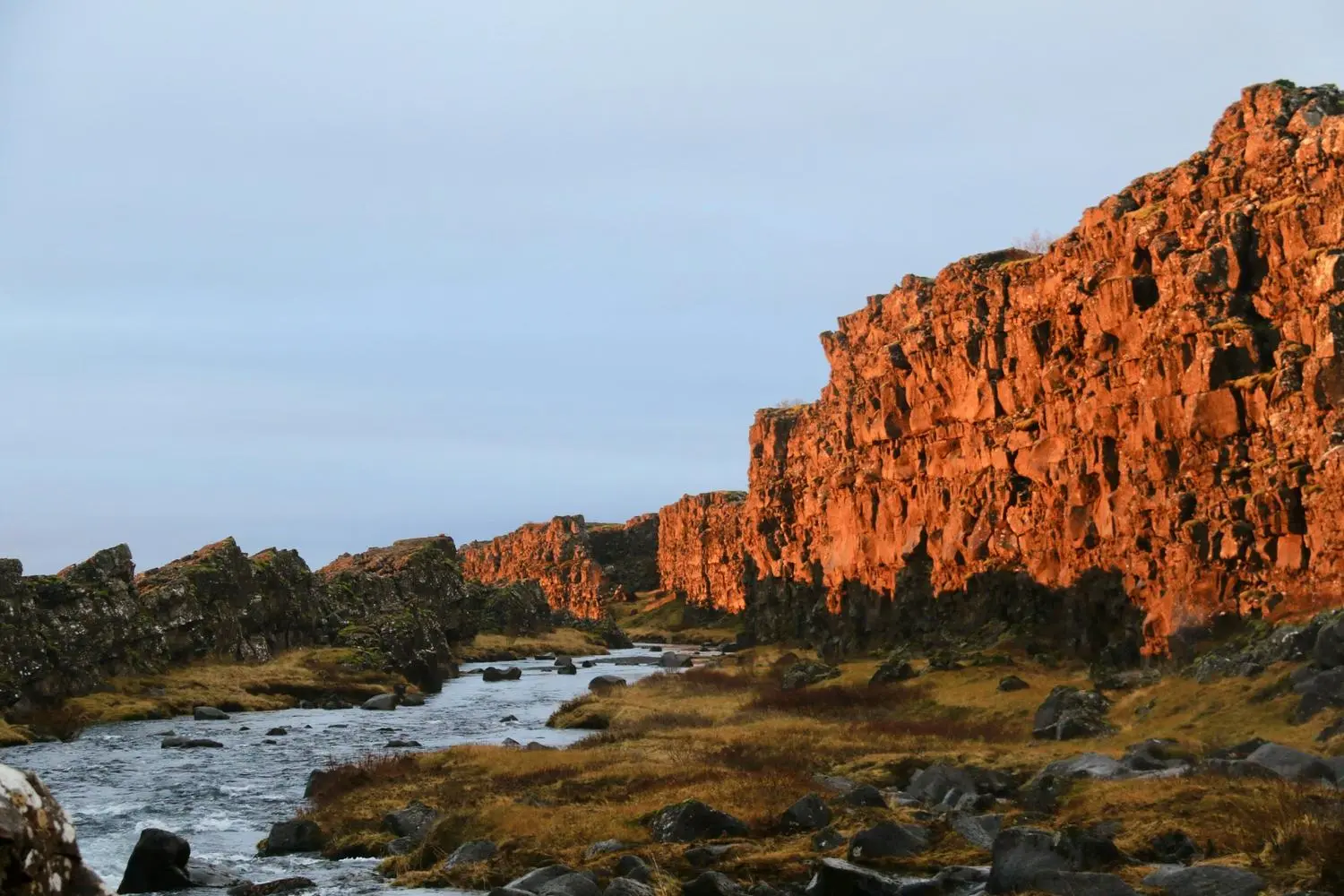
- Þingvellir National Park is a UNESCO World Heritage Site on the Mid-Atlantic Ridge where the North American and Eurasian tectonic plates are directly walkable
- The Reykjanes Peninsula has produced multiple fissure eruptions since March 2021 and holds UNESCO Global Geopark designation — 45 minutes from Reykjavík by car
- Laugardalslaug and Sundhöllin are public geothermal pools charged at local flat-rate admission, open every season to visitors and residents alike
- Volcano Express at Harpa Concert Hall runs daily 10:00–20:00 with shows every 15 minutes, year-round, using footage from Iceland's 2021–2024 eruption cycle
What should I not miss in Reykjavik?
The reykjavik town centre experiences no visitor should skip are Hallgrímskirkja's 73-metre tower, the Settlement Exhibition's Viking longhouse at Aðalstræti 16, a swim in a public geothermal pool, and the volcanic cinema inside Harpa Concert Hall. These are within 20 minutes on foot of each other. Tjörnin lake is free and geothermally heated. The Old Harbour (Grandi) is worth an afternoon for its food halls and working waterfront — the pulse of the city before the tourist trails arrive.
What are the best experiences in Iceland?
Iceland's standout geotourism experiences are Þingvellir National Park, the Geysir geothermal area, and active lava access on the Reykjanes Peninsula. Iceland has recorded 247 volcanic eruptions since 874 AD, according to the Icelandic Met Office. The Golden Circle concentrates three of those forces — tectonic plates at Þingvellir, geothermal heat at the Geysir area (Strokkur erupts to 20 metres every 5–7 minutes), glacial melt at Gullfoss — into one 300 km iceland reykjavik day circuit.
Reykjavik Area Geothermal Pools: The Local Secret
Reykjavík's geothermal pools — Sundhöllin on Barónsstígur and Laugardalslaug in the Laugardalur valley — are not lagoon attractions. They are public infrastructure, heated by volcanic energy, used every day by reykjavik city residents. Entry costs a flat local fee. In summer, Nauthólsvík Geothermal Beach adds a warm geothermal bay on Reykjavík's southern shore — free to use, almost entirely absent from travel guides.
How many days in Reykjavik is enough?
Two days covers the city's core geotourism experiences; three adds the Golden Circle; five reaches the South Coast glaciers and the Reykjanes Peninsula lava fields. Each extra day scales up the geological ambition. Fagradalsfjall on the Reykjanes Peninsula has produced eruptions visible from the city skyline since 2021 — the kind of active geology that makes every other landscape feel tame by comparison.
Where the Volcano Comes Inside — iceland capital reykjavik
Volcano Express, inside Harpa Concert Hall on Reykjavík's waterfront, is a cinematic motion-simulator volcanic experience delivering Iceland's geological story through dynamic motion seating, real heat effects, and footage from the 2021–2024 Reykjanes Peninsula eruptions. The 30-minute pre-show includes a live earthquake monitor, an interactive eruption map, and short films. The 10-minute cinematic ride that follows puts the audience inside the eruption. Floor K2, Harpa Concert Hall, Austurbakki 2. Daily 10:00–20:00, year-round, weather-independent.
The Blue Lagoon has temporarily closed during recent volcanic activity on the peninsula; check bluelagoon.is for current status before visiting. For the full safety picture on peninsula lava sites, How to See Lava Safely in Iceland (2026 Update) covers access protocols and the best sites in 2026.
Starting at Harpa
The geotourism trail begins on the waterfront. Harpa Concert Hall, Austurbakki 2 — Volcano Express on floor K2, open from 10:00 every morning, in every season. It is the geological orientation the rest of the trip deserves: Iceland's fire, pressure, and release, before heading out to stand on it. For a deeper read on what drives all of this beneath the surface, Keilir: Hiking Iceland's Iconic Subglacial Volcano on the Reykjanes Peninsula tells the full peninsula story.
Last updated: May 2026
The ground beneath Reykjavik is not quiet. Steam escapes through pavement grates. The harbour sits cold and silver in the early light. Reykjavik experiences begin before you've unpacked — a city built on lava, heated by the earth itself, where Iceland's volcanic geology is not history but present tense. This guide maps the geotourism encounters hiding in plain sight, and the routes that reach further.
Key takeaways
- Þingvellir National Park is a UNESCO World Heritage Site on the Mid-Atlantic Ridge where the North American and Eurasian tectonic plates are directly walkable
- The Reykjanes Peninsula has produced multiple fissure eruptions since March 2021 and holds UNESCO Global Geopark designation — 45 minutes from Reykjavík by car
- Laugardalslaug and Sundhöllin are public geothermal pools charged at local flat-rate admission, open every season to visitors and residents alike
- Volcano Express at Harpa Concert Hall runs daily 10:00–20:00 with shows every 15 minutes, year-round, using footage from Iceland's 2021–2024 eruption cycle
What should I not miss in Reykjavik?
The reykjavik town centre experiences no visitor should skip are Hallgrímskirkja's 73-metre tower, the Settlement Exhibition's Viking longhouse at Aðalstræti 16, a swim in a public geothermal pool, and the volcanic cinema inside Harpa Concert Hall. These are within 20 minutes on foot of each other. Tjörnin lake is free and geothermally heated. The Old Harbour (Grandi) is worth an afternoon for its food halls and working waterfront — the pulse of the city before the tourist trails arrive.
What are the best experiences in Iceland?
Iceland's standout geotourism experiences are Þingvellir National Park, the Geysir geothermal area, and active lava access on the Reykjanes Peninsula. Iceland has recorded 247 volcanic eruptions since 874 AD, according to the Icelandic Met Office. The Golden Circle concentrates three of those forces — tectonic plates at Þingvellir, geothermal heat at the Geysir area (Strokkur erupts to 20 metres every 5–7 minutes), glacial melt at Gullfoss — into one 300 km iceland reykjavik day circuit.
Reykjavik Area Geothermal Pools: The Local Secret
Reykjavík's geothermal pools — Sundhöllin on Barónsstígur and Laugardalslaug in the Laugardalur valley — are not lagoon attractions. They are public infrastructure, heated by volcanic energy, used every day by reykjavik city residents. Entry costs a flat local fee. In summer, Nauthólsvík Geothermal Beach adds a warm geothermal bay on Reykjavík's southern shore — free to use, almost entirely absent from travel guides.
How many days in Reykjavik is enough?
Two days covers the city's core geotourism experiences; three adds the Golden Circle; five reaches the South Coast glaciers and the Reykjanes Peninsula lava fields. Each extra day scales up the geological ambition. Fagradalsfjall on the Reykjanes Peninsula has produced eruptions visible from the city skyline since 2021 — the kind of active geology that makes every other landscape feel tame by comparison.
Where the Volcano Comes Inside — iceland capital reykjavik
Volcano Express, inside Harpa Concert Hall on Reykjavík's waterfront, is a cinematic motion-simulator volcanic experience delivering Iceland's geological story through dynamic motion seating, real heat effects, and footage from the 2021–2024 Reykjanes Peninsula eruptions. The 30-minute pre-show includes a live earthquake monitor, an interactive eruption map, and short films. The 10-minute cinematic ride that follows puts the audience inside the eruption. Floor K2, Harpa Concert Hall, Austurbakki 2. Daily 10:00–20:00, year-round, weather-independent.
The Blue Lagoon has temporarily closed during recent volcanic activity on the peninsula; check bluelagoon.is for current status before visiting. For the full safety picture on peninsula lava sites, How to See Lava Safely in Iceland (2026 Update) covers access protocols and the best sites in 2026.
Starting at Harpa
The geotourism trail begins on the waterfront. Harpa Concert Hall, Austurbakki 2 — Volcano Express on floor K2, open from 10:00 every morning, in every season. It is the geological orientation the rest of the trip deserves: Iceland's fire, pressure, and release, before heading out to stand on it. For a deeper read on what drives all of this beneath the surface, Keilir: Hiking Iceland's Iconic Subglacial Volcano on the Reykjanes Peninsula tells the full peninsula story.


.jpg)