


Last updated: September 2026
The KP index measures global geomagnetic activity on a 0–9 scale — and the single most useful thing to know is that Iceland sits so far north, directly under the auroral oval, that KP 2–3 is often enough for a visible display. Tourists routinely stay indoors because an app shows "only KP 2" — advice calibrated for Scotland or Germany, not for 64°N. This guide explains what the numbers actually mean, how to read Iceland's own vedur.is forecast (including the cloud map most people read backward), and which trackers are worth having on your phone.
Key takeaways
- KP runs 0–9 and measures planetary geomagnetic disturbance in 3-hour blocks — it is not a "chance of aurora" percentage
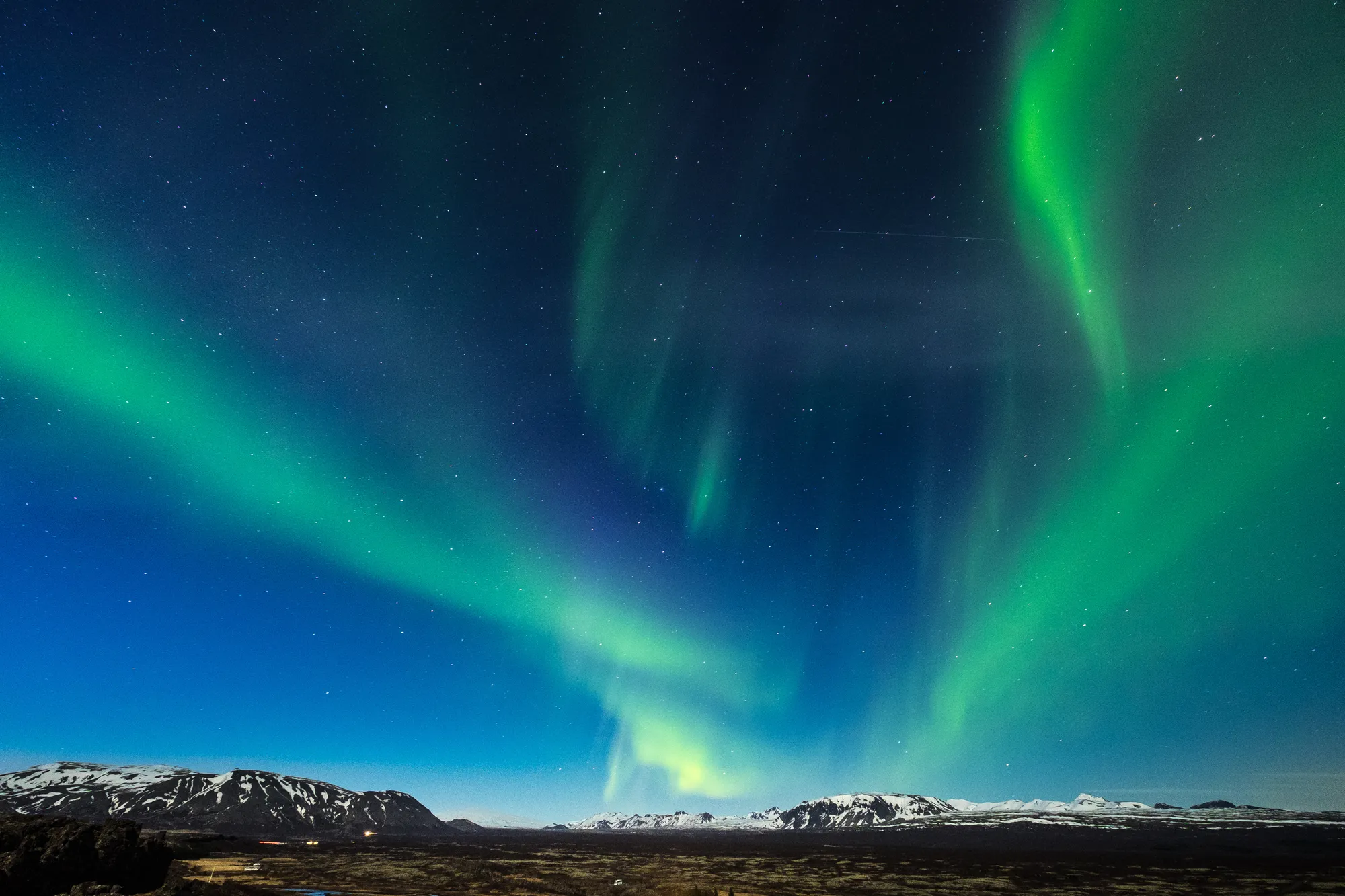
- In Iceland, KP 2–3 already gives good chances; KP 4+ means a strong show; KP 7–9 can outshine Reykjavík's city lights
- The vedur.is forecast combines an activity number (0–9) with a cloud-cover map — white areas mean clear sky, green means cloud
- Clear sky matters more than a high KP: a KP 5 night under cloud shows you nothing
- Aurora season in Iceland runs from late August to mid-April — darkness, not temperature, is the requirement
What is the KP index?
The KP index (planetary K-index) condenses readings from magnetometers around the world into one 0–9 number describing how disturbed Earth's magnetic field is over each 3-hour window. Charged particles from the Sun disturb the field; more disturbance pushes the auroral oval — the ring of aurora around the magnetic pole — further south and makes displays brighter and more active.
Two things the KP is not. It is not a probability: KP 3 doesn't mean a 30% chance, it means a measured (or forecast) level of activity. And it is not location-aware: the same KP 3 that is invisible from Berlin can be a curtained sky over Þingvellir, because Iceland sits beneath the oval at almost any activity level.
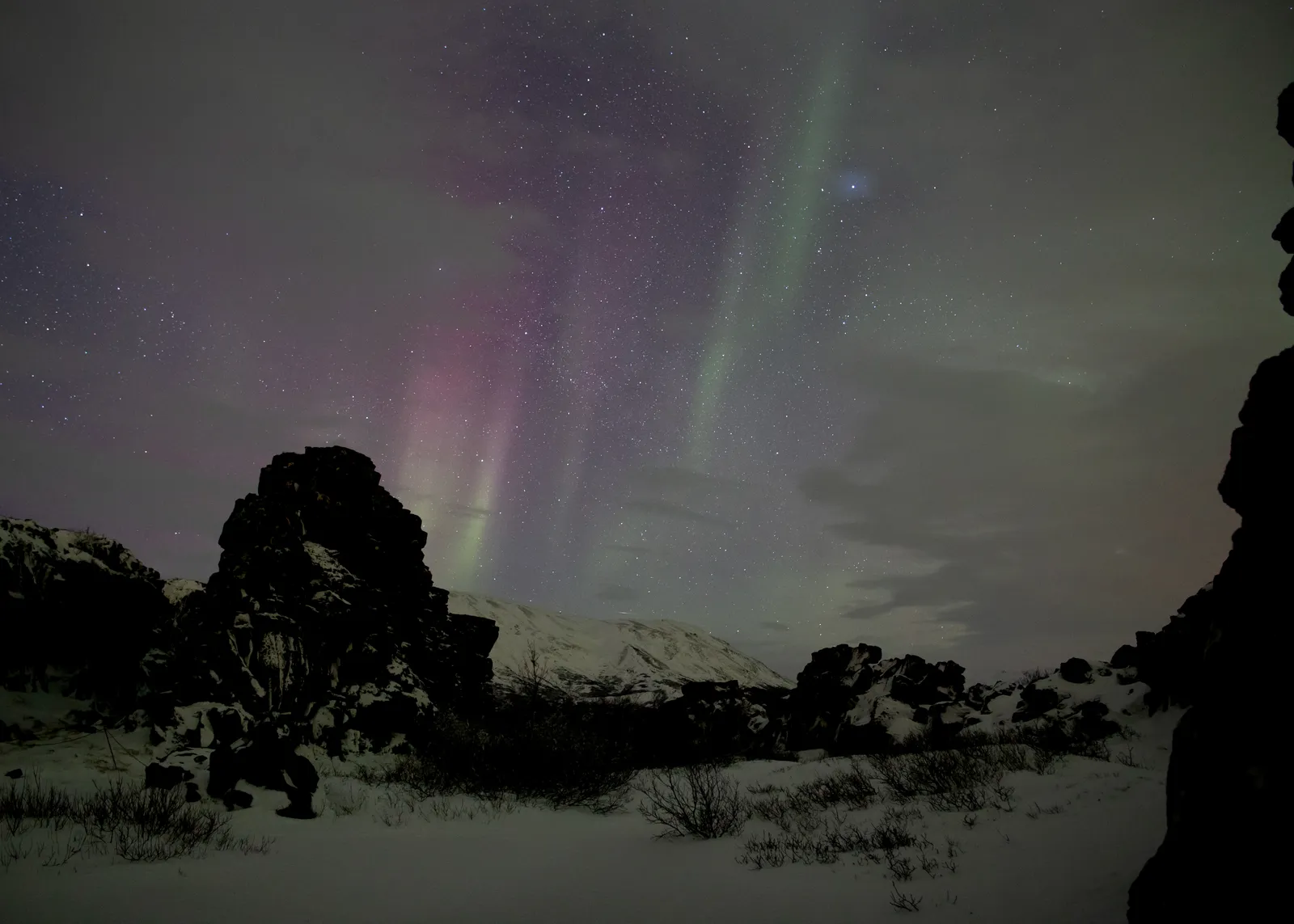
As a rule of thumb for Iceland: KP 0–1 — faint, but worth a look on a clear dark night; KP 2–3 — realistic chance of a proper display away from city lights; KP 4–6 — strong, active show likely; KP 7–9 — rare storm conditions, visible even from downtown Reykjavík.
How do I read the vedur.is aurora forecast?
The Icelandic Met Office forecast at en.vedur.is/weather/forecasts/aurora combines two layers: an activity number (0–9, shown top right) and a cloud-cover map — and the map is the part that decides your night. On the map, white means clear sky and green means cloud. First-time users regularly read it backward, drive toward the biggest green blob, and see nothing: that blob is a cloud deck.
Two details from the Met Office's own instructions that most summaries miss: the activity number describes conditions around midnight on the selected day, not the whole evening; and the slider under the map lets you step through the night hour by hour to find when a clear gap passes over your location. The practical method is: find white (or the thinnest cloud) within driving distance first, then check whether the activity number justifies the drive. A 2 under clear sky beats a 5 under cloud every single time.
Which northern-lights tracker apps actually help?
Three tools cover essentially everything: the vedur.is forecast for clouds, NOAA's 30-minute aurora forecast for the short-term oval, and a community-alert app for real-time sightings.
- vedur.is (web) — the cloud-cover layer is the one thing no global app does well for Iceland. Non-negotiable.
- NOAA SWPC 30-minute forecast (web) — the OVATION model maps where the auroral oval sits right now. If the green ring covers Iceland, conditions are working.
- hello aurora (app, Icelandic-made) — combines forecast data with user-reported sightings across Iceland, so you learn the lights are out from someone forty minutes east of you rather than from a model.
- My Aurora Forecast & Alerts (app) — serviceable KP push alerts; treat its percentage "probability" numbers as decoration.
- For the technically curious, SpaceWeatherLive exposes the underlying solar-wind data. One number worth learning: Bz, the north–south direction of the interplanetary magnetic field. When Bz swings sharply negative (southward), auroras tend to fire within the hour — it's the best short-term trigger there is, better than KP.
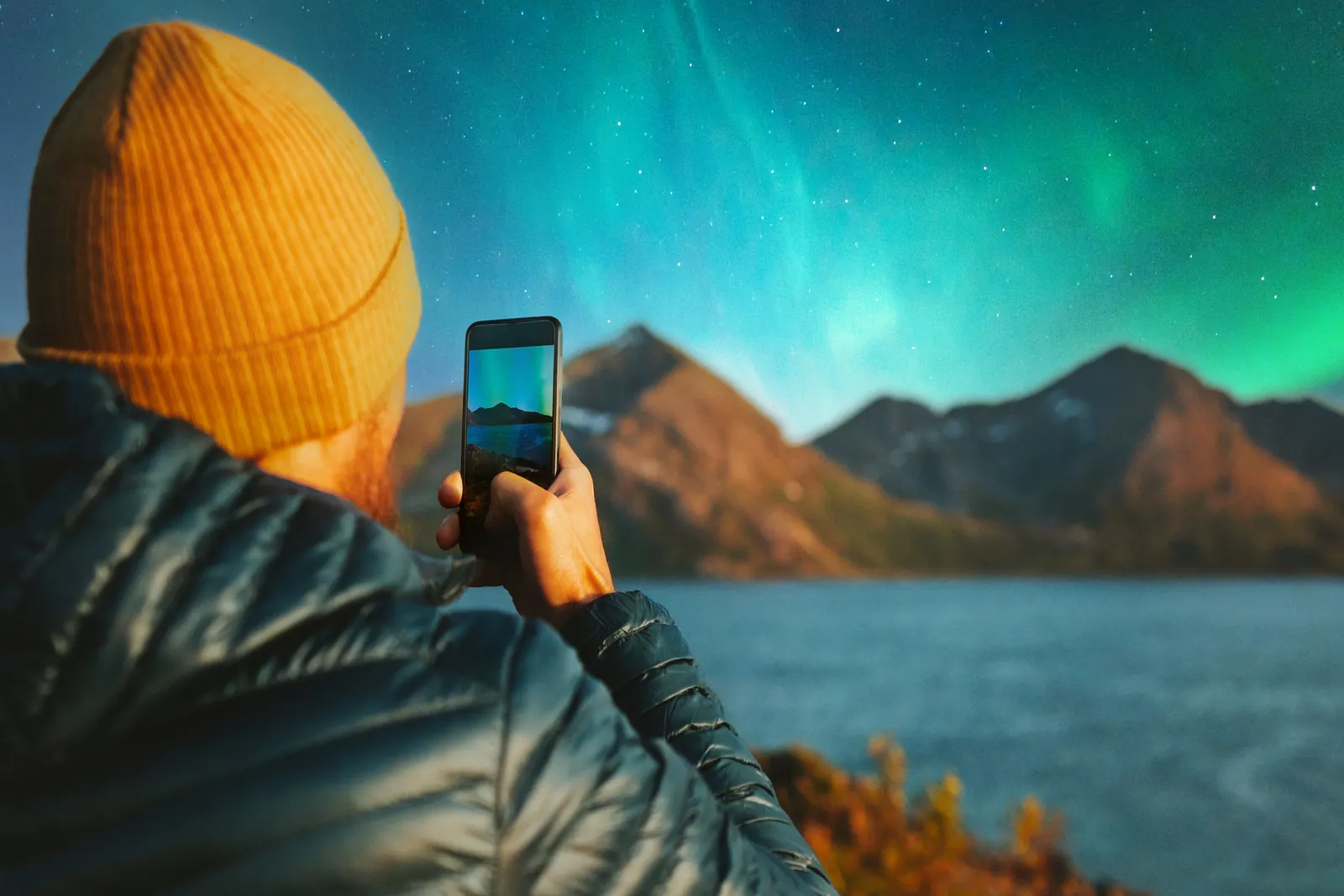
The 45-minute rule: your eyes need up to 45 minutes in real darkness to reach full sensitivity, and displays pulse in waves with quiet gaps. The most common way to miss the aurora in Iceland is giving up 20 minutes too early.
When and where should I watch from?
Any dark night from late August to mid-April can work; the season peaks around the September and March equinoxes, when geomagnetic activity statistically runs higher. The Sun also remains near the strong peak of solar cycle 25, which has made 2024–2027 an unusually good window in general. Check the moon phase — a full moon washes out faint displays — and get away from direct streetlight.
You do not need to drive far: from Reykjavík, Grótta lighthouse, Öskjuhlíð hill or a 40-minute drive to Þingvellir all work on an active night. For the full picture of where to go — in the capital and around the country — see our Reykjavík northern-lights forecast and viewing guide and the ranked guide to Iceland's best aurora locations. For how Iceland's notorious weather actually behaves, see what counts as good weather in Iceland.
What if the forecast is cloudy?
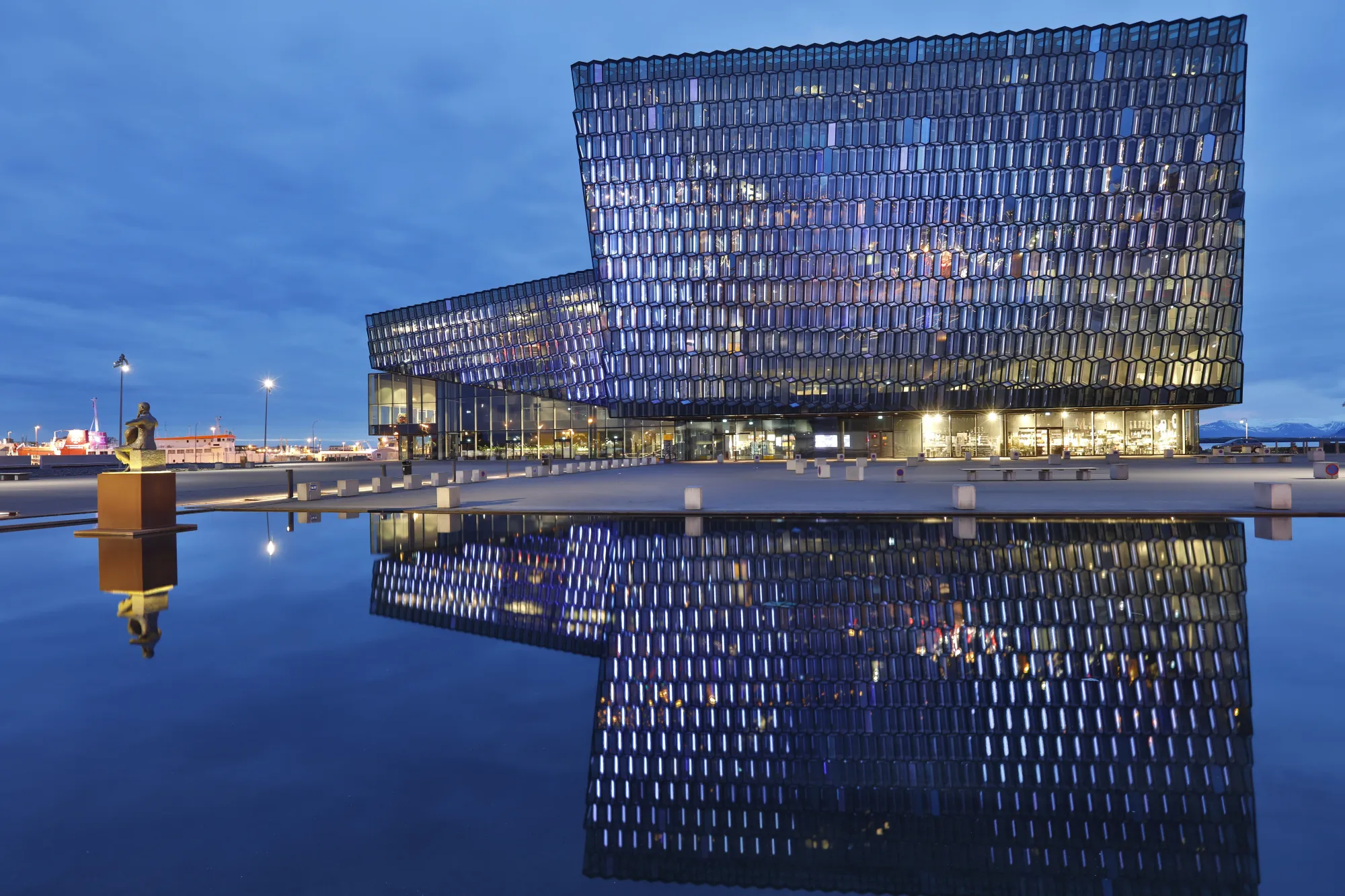
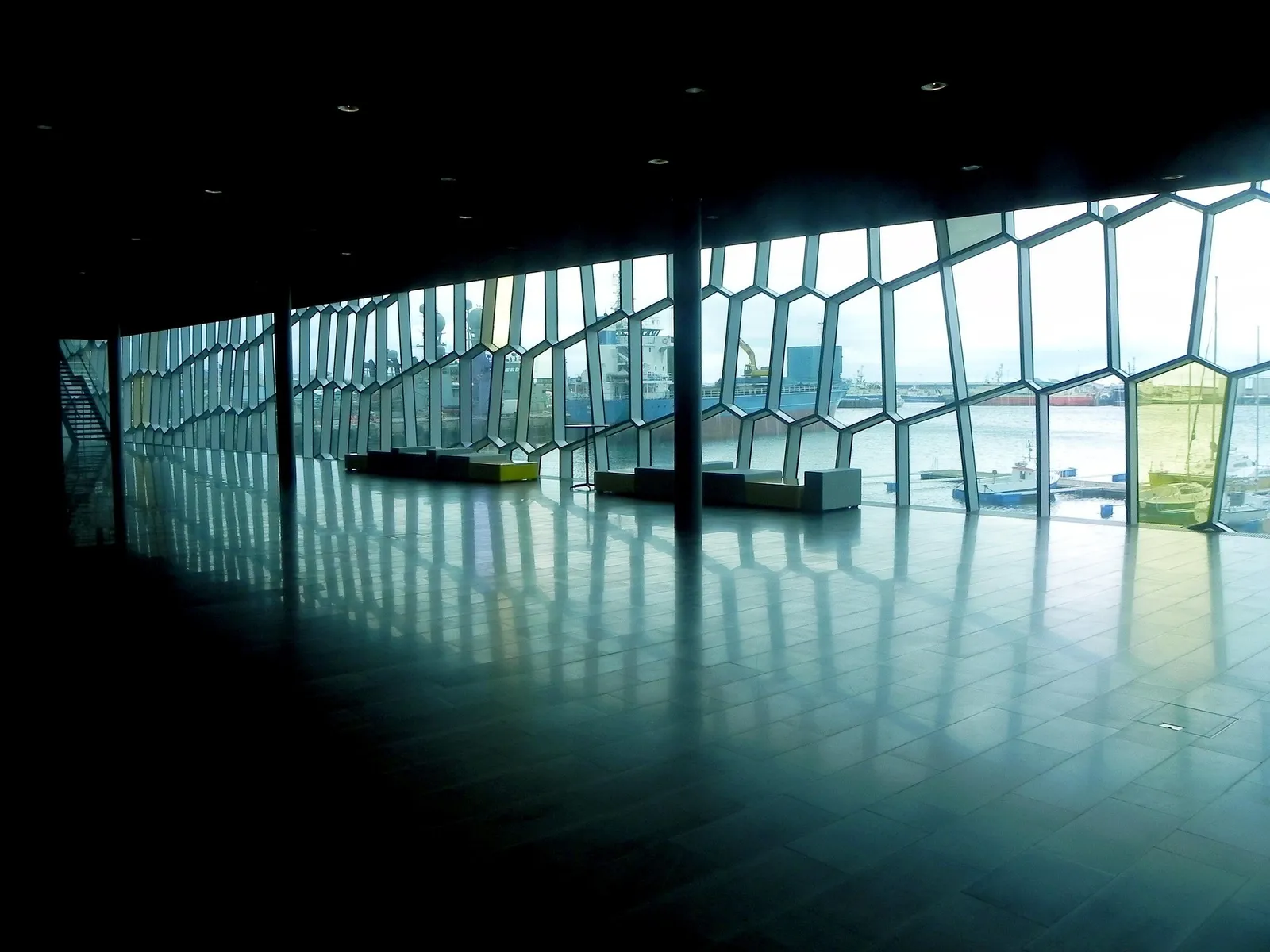
Some nights the map is green from coast to coast, and no app fixes that — which is exactly when Reykjavík's indoor "nature at full power" option earns its place. Volcano Express at Harpa Concert Hall runs its cinematic motion-seat eruption experience daily 10:00–20:00, every 15 minutes — the island's other great light show, on demand and weather-proof, filmed at the actual Reykjanes fissures between 2021 and 2024. A practical Reykjavík evening in aurora season: Volcano Express at 19:00, dinner by the harbor, then out hunting when the sky clears — with hello aurora set to ping you.