


Published February 2026 · Last updated: September 2026
Magma is molten rock beneath the Earth's surface; lava is the same molten rock once it erupts and reaches the surface. That is the whole difference — same material, different location. This guide explains it in plain terms, and shows why Iceland, sitting on the Mid-Atlantic Ridge, produces so much of both.
Key takeaways
- Magma and lava are the same molten rock — the name changes when it reaches the surface
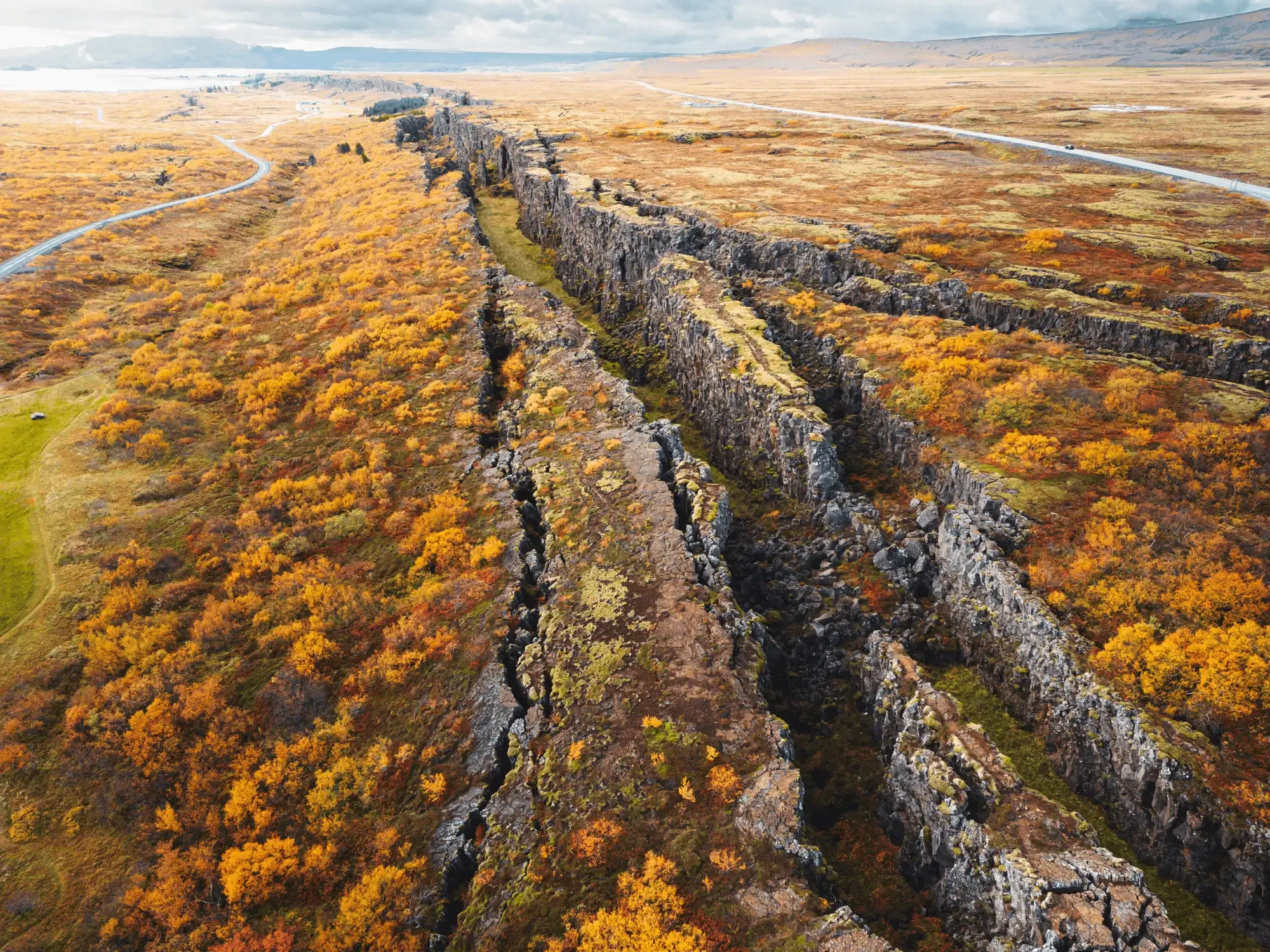
- The North American and Eurasian plates separate at roughly 2 cm per year beneath Iceland
- Iceland has had an eruption on average every three to five years
- Icelandic basaltic lava erupts at around 1,100–1,200°C (2,000–2,200°F)
- Nearly all of Iceland — black beaches, hexagonal columns, cliffs — is basalt, cooled lava
What is the difference between magma and lava?
The difference is location, not composition. Magma is molten rock while it is still underground. Lava is molten rock that has broken through to the surface. The moment magma erupts, it gets a new name — nothing about the material itself changes.
| Magma | Lava | |
|---|---|---|
| Where it is | Below the surface | On the surface |
| Same material? | Yes — identical molten rock | Yes — identical molten rock |
| What changes | Under pressure, holds dissolved gas | Releases gas, cools and hardens |
| Can you see it? | No — it is underground | Yes — during an eruption |
Think of it like water in a covered pot versus water that has boiled over the edge. It is the same water; only its position changed. Magma is the molten rock hidden beneath the crust, building pressure in underground chambers. Once it breaks through a vent or fissure, it becomes lava.
What Is Magma?
Magma is molten or partially molten rock beneath the Earth’s surface — a mixture of liquid silicate melt, suspended crystals, and dissolved gases such as water vapor and carbon dioxide. It forms where temperature, pressure and water content allow rock in the crust or upper mantle to melt, typically between about 700°C and 1,300°C. Because it is less dense than the solid rock around it, magma rises — collecting in reservoirs, and sometimes reaching the surface, where it earns its second name.
The dissolved gas matters more than it sounds: held in solution under pressure, it is what drives eruptions when magma rises and the pressure drops — the same physics as opening a shaken bottle. Iceland’s magma reservoirs are why the island has geothermal power, hot springs, and an eruption on average every three to five years.
The Three Types of Magma
Geologists divide magma into three main types by silica content, and the type controls how an eruption behaves:
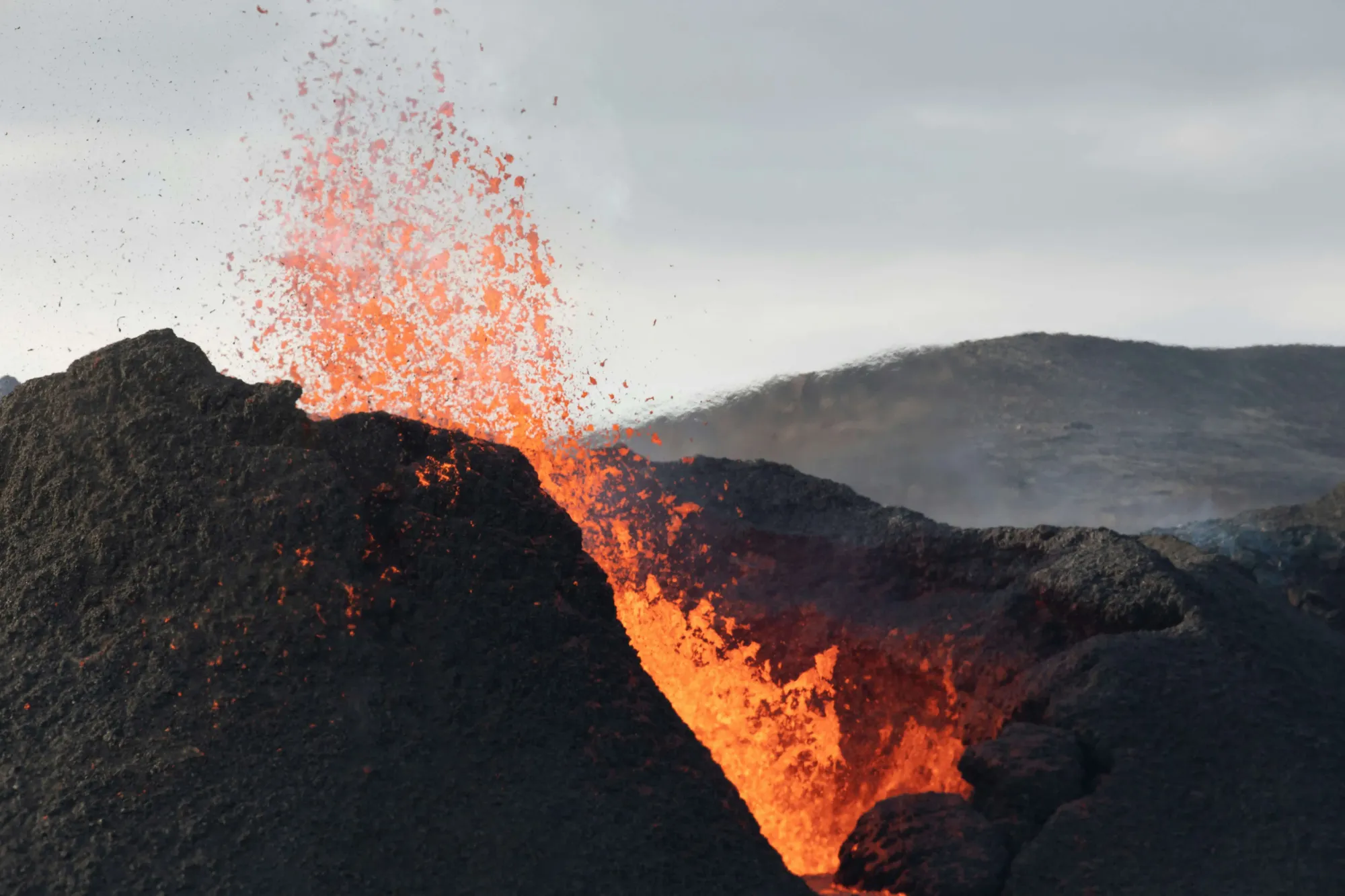
- Basaltic magma (lowest silica, hottest at roughly 1,100–1,300°C) flows easily and releases its gas gently — producing the lava fountains and rivers Iceland is known for. Nearly all Icelandic eruptions, including the entire Reykjanes sequence since 2021, are basaltic.
- Andesitic magma (intermediate, roughly 800–1,000°C) is stickier and more explosive — typical of subduction-zone volcanoes like the Andes it is named after.
- Rhyolitic magma (highest silica, coolest at roughly 650–800°C) is so viscous that gas cannot escape, which is what makes eruptions like Yellowstone’s ancient events catastrophically explosive. Iceland produces small amounts — the light-colored rock at Landmannalaugar is rhyolite.
The rule of thumb: the more silica, the stickier the magma, the more violent the eruption. Iceland’s luck is that its rift-fed magma is overwhelmingly the runny, relatively gentle kind.
How Hot Is Magma Compared to Lava?
Magma and lava start at the same temperature — the moment of eruption changes the name, not the heat. Icelandic basaltic lava emerges at around 1,100–1,200°C and then cools fast at the surface: a glowing flow can crust over within hours, while the interior of a thick flow stays hot for months. Underground, magma held in reservoirs cools far more slowly, over centuries to millennia, which is why systems like Svartsengi can pause between eruptions and reheat.
For the full temperature story — including how we measure it and what the colors of glowing lava mean — see how hot lava really is. And to feel the radiated heat of the real thing safely, the Volcano Express ride at Harpa pairs its Reykjanes eruption footage with genuine heat effects — the closest most visitors will ever stand to 1,200°C.
Why does Iceland have so much magma and lava?
Iceland sits on the Mid-Atlantic Ridge, where two tectonic plates pull apart, and directly above a mantle hotspot. That combination is rare, and it is why the island is one of the most volcanically active places on Earth.
- The North American and Eurasian plates separate at roughly 2 cm per year, which keeps opening paths for magma to rise. Read more about why Iceland is pulling apart.
- Iceland has had an eruption on average every three to five years.
- The hotspot feeds exceptionally hot magma from deep within the mantle, on top of what the spreading ridge already supplies.
Learn more from the University of Iceland Institute of Earth Sciences, which monitors and studies this activity.
"Every eruption you see in the show started as magma kilometres below the surface — by the time anyone can film it, it has already changed its name." — the Volcano Express team
What is a magma chamber?
Before magma can erupt as lava, it has to collect somewhere. That somewhere is a magma chamber — an underground reservoir where molten rock gathers and builds pressure. A magma chamber is not an empty cave filled with liquid rock. It is closer to a sponge soaked with water: a zone of mostly solid rock whose pore spaces hold molten material between still-solid crystals.
As more magma rises from the mantle, the chamber fills and pressure builds. When the pressure is high enough and a pathway to the surface opens, the magma forces its way upward. Once it breaches the surface, it is no longer magma — it is lava.
What is basalt, and why is it everywhere in Iceland?
Basalt is the dark volcanic rock that most of Iceland is made of. It forms when basaltic lava — low in silica, rich in iron and magnesium — cools and hardens. That chemistry makes it runny as molten rock goes, somewhere between molasses and peanut butter, which is why Icelandic lava usually flows across the ground instead of erupting explosively.
The black sand beaches around the country are basalt. The hexagonal columns at Reynisfjara are basalt that cooled in a particular way. The cliffs and jagged islands are basalt too. Iceland is a basalt factory that has been running for millions of years.
What is a fissure eruption?
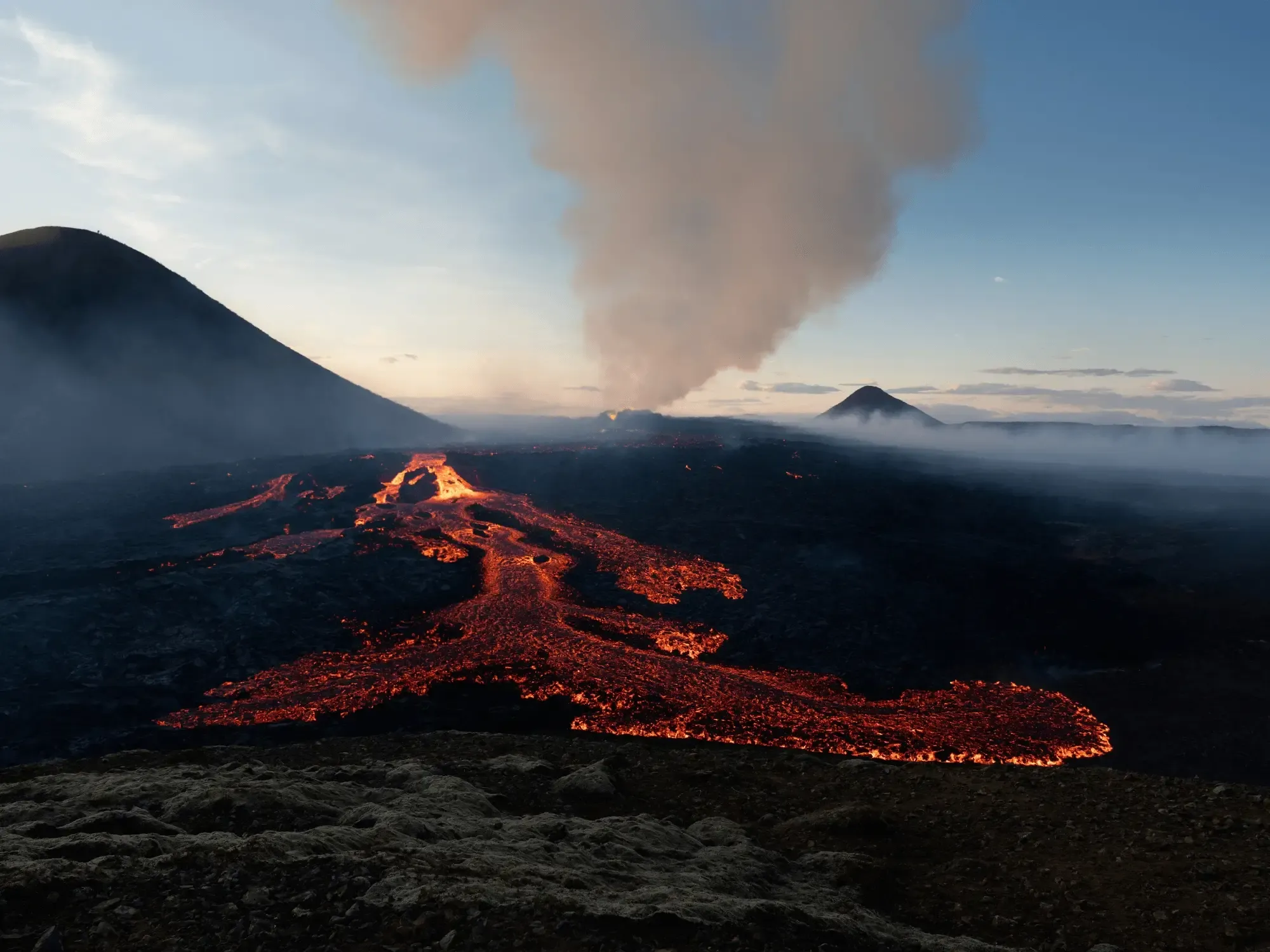
A fissure eruption is when lava pours out along a long crack in the crust rather than from a single vent. This is the typical Icelandic eruption — not the cone-shaped mountain with a crater most people picture. The 2021 Fagradalsfjall eruption began as a fissure about 200 metres long and quickly grew to roughly 500 metres, with lava emerging along the entire line.
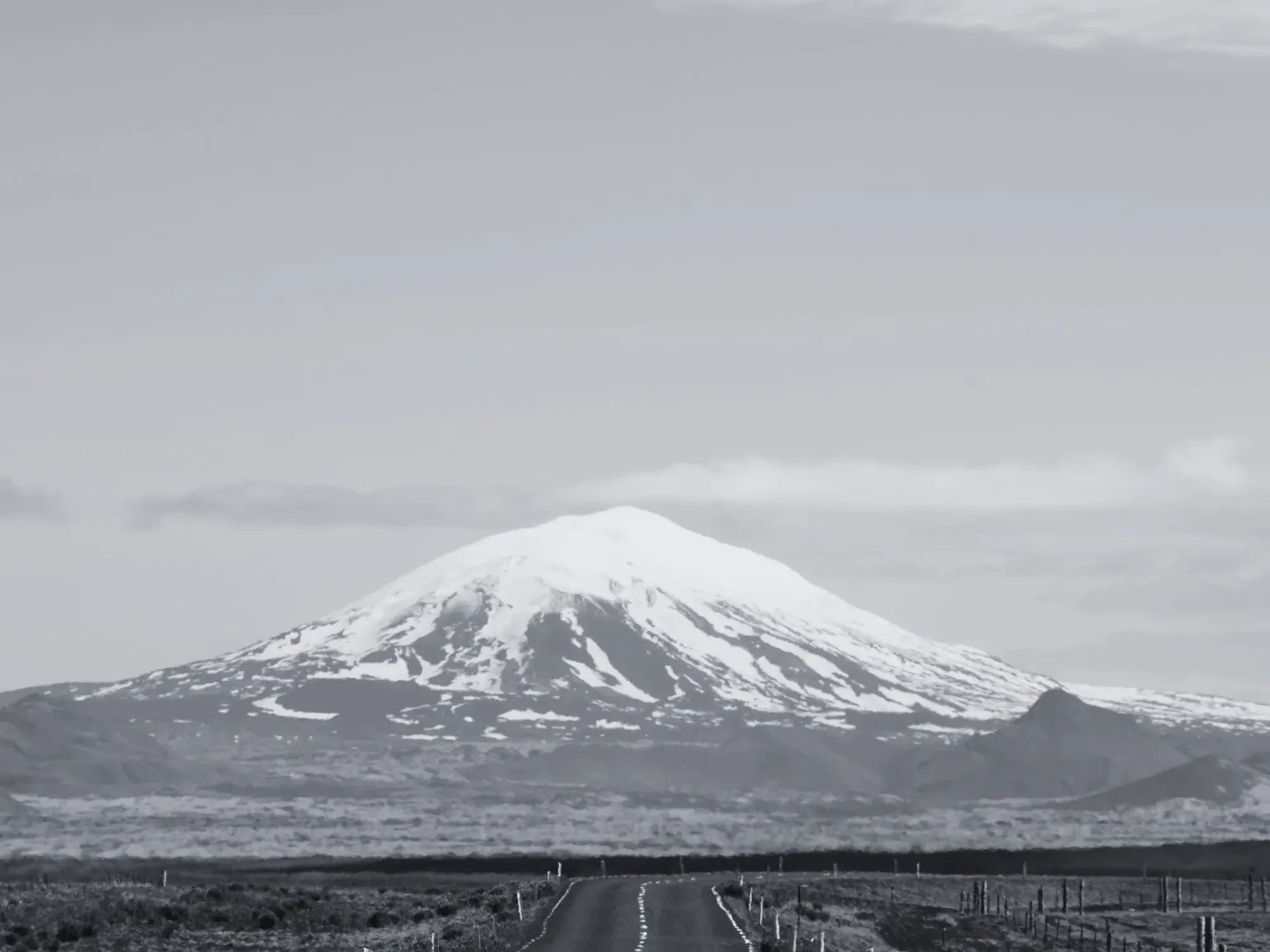
Iceland has classic cone-shaped stratovolcanoes too — Hekla and Katla among them — but the eruptions that have defined the last few years look nothing like the mountain-with-a-crater picture. Lava emerging along a line of low cones is the signature of the current Reykjanes cycle.
The Reykjanes peninsula has produced a whole sequence of these events since 2021 — the full story is in our Reykjanes eruption timeline 2021–2026.
How hot is magma and lava in Iceland?
Basaltic lava in Iceland erupts at around 1,100 to 1,200°C (about 2,000 to 2,200°F) — hot enough to melt most metals on contact. Underground magma sits across a wider range, roughly 700 to 1,300°C, as it partially melts and mixes with surrounding rock. The glow you see in lava is not flame: the rock itself is so hot it radiates visible light.
That heat lingers. A fresh flow keeps a molten interior long after its surface has crusted over, and when lava meets water the water flashes instantly to steam. We cover the physics in detail in how hot is lava?
Why do volcanic gases make eruptions dangerous?
Magma holds dissolved gases — mainly water vapour, carbon dioxide and sulphur dioxide — and those gases escape as it rises, like bubbles appearing when you open a soda bottle. In Iceland's fluid basaltic eruptions the gas vents steadily rather than building into a violent blast, which is why the recent Reykjanes eruptions have been comparatively calm.
Steady venting does not mean safe. Sulphur dioxide near an active flow is a real hazard, and gas levels are the main reason authorities restrict access to eruption sites even when the lava itself looks approachable.
How fast does lava cool?
Lava starts cooling the moment it reaches the surface. The outer skin can harden into a crust within hours, while the interior stays molten for weeks or even months. That is what makes walking on a fresh flow so dangerous — what looks solid can be a thin shell over liquid rock.
Magma cools far more slowly. Insulated by kilometres of surrounding rock, an underground chamber can stay molten for years or decades. The difference in cooling speed, not temperature, is the practical answer to "which cools faster" — lava, every time.
How do scientists know where magma is moving?
Nobody can see magma directly, so scientists read its movements from the surface. Rising magma cracks the rock around it, producing swarms of small earthquakes; it also pushes the ground upward, a bulge measurable by GPS stations and satellite radar down to millimetres. Before the 2021 Fagradalsfjall eruption, the peninsula recorded tens of thousands of earthquakes in a few weeks — the sound of magma forcing a path toward the surface.
This is why Icelandic eruptions rarely arrive unannounced. The Icelandic Met Office tracks quake swarms and ground deformation around the clock, and eruption warnings typically come hours to days before lava appears.
Why does the magma vs lava distinction matter?
The distinction is practical, not pedantic. Magma behaviour — how much gas it holds, how it moves underground — decides when and where an eruption starts, which is what forecasting depends on. Lava behaviour — how fast it flows and cools — decides what happens to roads, towns and travellers once an eruption is underway. Iceland's 2021–2024 eruptions were forecast from magma signals and managed around lava flows, two different sciences working on the same molten rock.
For a visitor, knowing the difference turns scenery into a story: every black beach, hexagonal column and steaming field you pass began as magma that finished its journey as lava.
Can you see real magma or lava in Iceland safely?
Live access to an active lava flow opens and closes at short notice, and it is controlled for safety — gas levels, ground stability and weather all play a part. For current conditions on the Reykjanes peninsula, check safetravel.is and the Icelandic Met Office at en.vedur.is.
Volcano Express, inside Harpa Concert Hall on Reykjavík's waterfront, shows real, unedited footage of Iceland's 2021–2024 Reykjanes eruptions as a cinematic motion-seat experience with heat effects — indoor, year-round and weather-independent. You watch magma chambers fill, pressure build, and the moment molten rock breaches the crust and takes its new name. As of 2026 it runs daily from 10:00 to 20:00 on floor K2.
Magma vs lava FAQ
Is lava hotter than magma?
Not inherently. They are the same molten rock. Lava can cool quickly at the surface, while magma can stay molten underground for years, but the material itself is the same.
What is magma called once it reaches the surface?
Lava. The only things that change when magma erupts are its name and its location.
What type of magma does Iceland have?
Mostly basaltic (mafic) magma, which is low in silica and flows easily. Iceland also produces intermediate and rhyolitic magma in smaller amounts, and those erupt more explosively.
Which cools faster, lava or magma?
Lava. Exposed to air or water, it crusts over within hours. Magma, insulated underground, can stay molten for decades.
Where can I see Iceland's volcanic footage without hiking to an eruption?
Volcano Express at Harpa in Reykjavík shows real 2021–2024 eruption footage indoors, year-round, with heat and motion effects.
This article is part of our complete guide: Volcanic Science & Iceland Geology.